

About TNSDC at UCEV
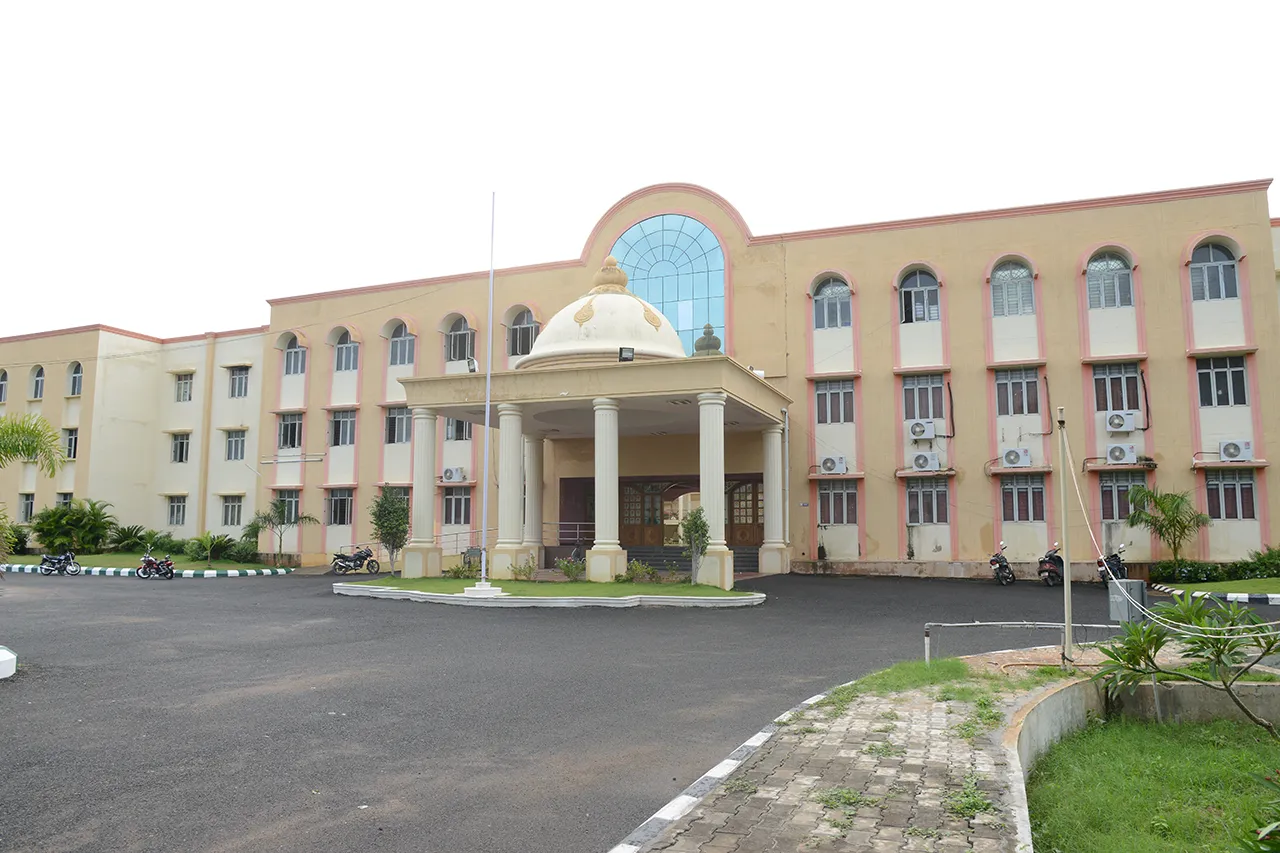
Welcome to University College of Engineering, Villupuram
About TNSDC at UCEV
The Tamil Nadu Skill Development Corporation (TNSDC) is a government initiative created to help young people learn practical job skills. Often, college classes teach a lot of theory. TNSDC fixes this by giving students real, hands-on training so they are ready for the job market.
At our college (UCEV), we have set up the TNSDC / SIEMENS Technical Skill Development Institute (t-SDI). This center has modern labs where engineering students can work with real tools, machines, and electronics that are used in the industry today.
The t-SDI (TNSDC) consists of 6 distinct laboratories designed to offer real-world practical training to Engineering/Science graduates, Diploma students and Farmers
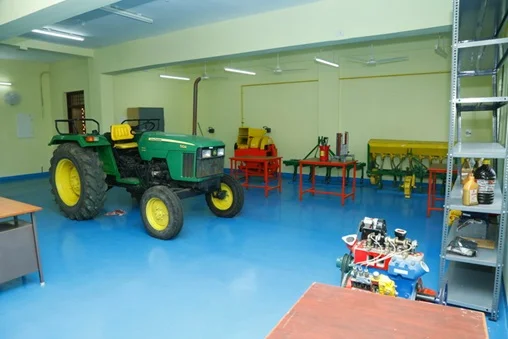
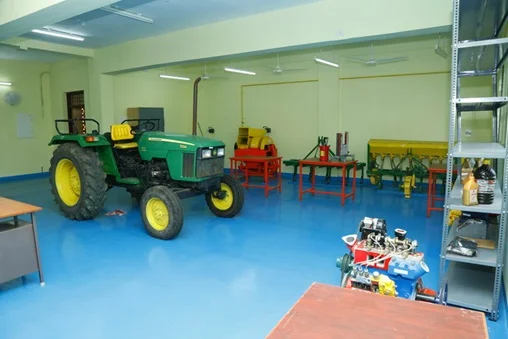
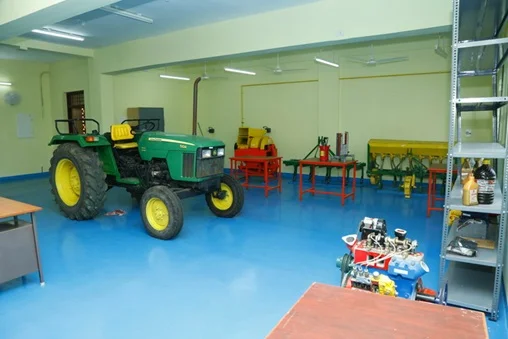
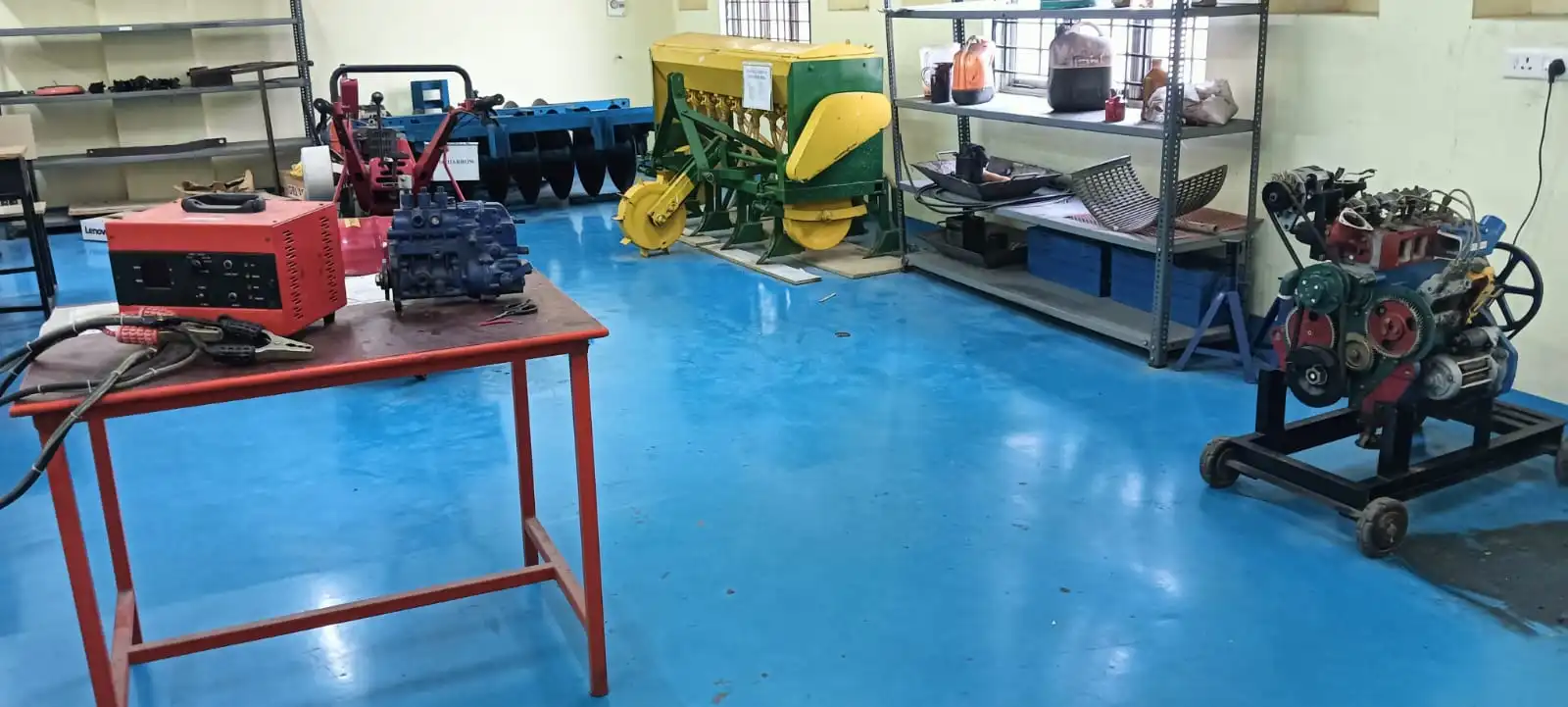
AGRICULTURE MACHINERY LAB t-SDI (TNSDC)
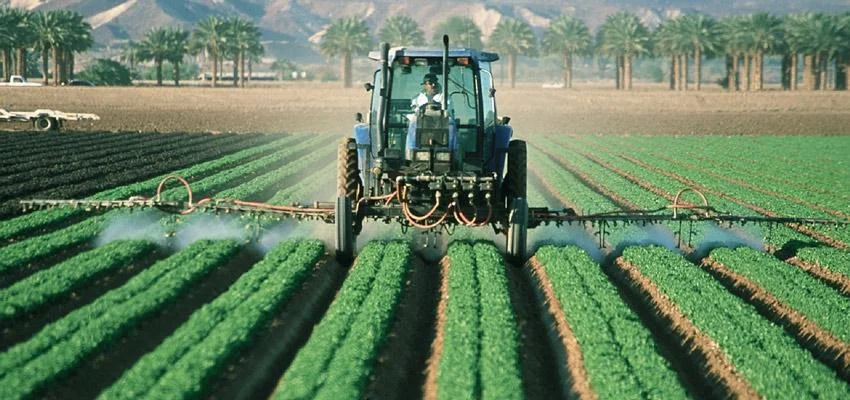
An Agriculture Laboratory is a specialized facility used for conducting experiments, testing, and research related to agriculture. It helps students, researchers, and farmers understand various aspects of crop production, soil management, irrigation, plant protection, and agricultural machinery. The laboratory provides practical knowledge of soil analysis, seed testing, fertilizer application, plant disease identification, and water quality assessment.
Through hands-on experiments and demonstrations, students develop technical skills and gain a better understanding of modern agricultural practices. The laboratory provides training on the operation and handling of various agricultural machines and equipment, including harvesting machines used in different cultivation conditions, multi-crop threshers, zero-till seed-cum-fertilizer drills, and chaff cutters. Students also learn battery testing using a battery load testing machine, soil testing for agricultural lands, and the operation of irrigation control systems. Practical training is provided on tractor operation in different field conditions, including muddy and dry land.
In addition, the laboratory demonstrates the working principles of tractor systems through tractor engine cut-section models. The main objective of the Agriculture Laboratory is to enhance practical knowledge, improve technical competency, and prepare students for careers in agriculture, farm machinery management, and agricultural engineering. It also helps students understand the efficient use of modern agricultural technologies for improving farm productivity and sustainability.
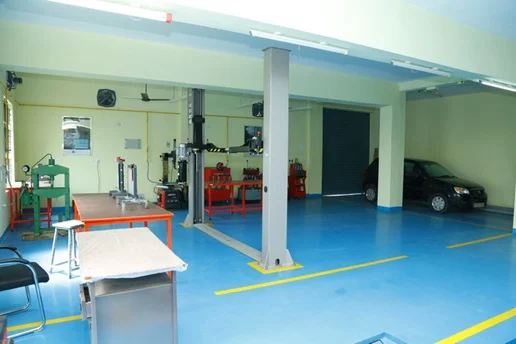
AUTO LAB FOUR WHEELER t-SDI (TNSDC)
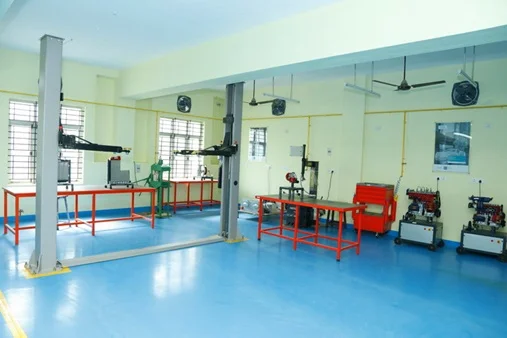
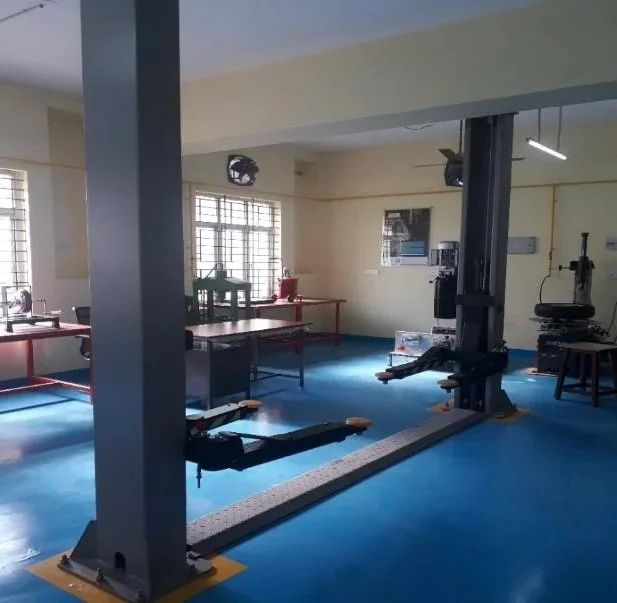
The Auto Four-Wheeler Laboratory is a practical training center where students learn how modern cars and commercial vehicles are built, how they work, and how to fix them. This laboratory connects classroom theory with real-world practice by giving students hands-on training with critical car systems like internal combustion engines, gearboxes, steering, brakes, and automotive electronics. Students learn how to use professional garage equipment safely, read diagnostic tools, and follow standard steps for servicing vehicles. During the training, students practice using heavy machinery like the Two-Post 4.0T Car Lift to lift vehicles up to 1900mm, which allows them to inspect the underside of the car, check the exhaust, and make structural repairs.
They also get to use professional workshop tools to fix steering issues, check wheel angles like caster, camber, and toe, and balance tires to remove high-speed vibrations. Students get plenty of practice taking apart and reassembling multi-cylinder car engines and gearboxes to see exactly how power travels through a vehicle and how parts wear down over time. In addition, they use clear wiring models and radiator setups to understand how car electrical lines, sensors, and cooling systems work, while also using exhaust gas machines to test car smoke for pollution. The main goal of this laboratory is to build strong technical skills and confidence, preparing students for successful careers in car manufacturing, workshop management, research, and transport engineering by focusing on workshop safety, correct tool handling, and clean maintenance habits.
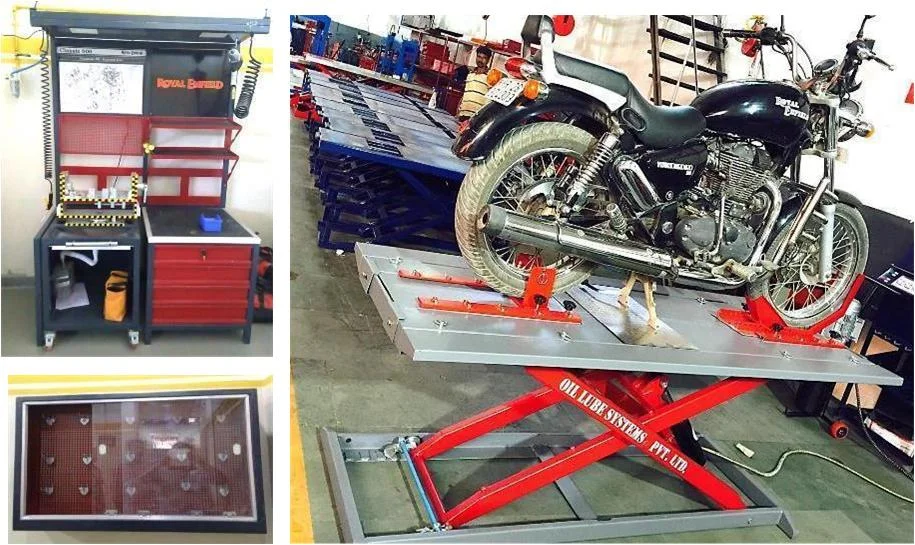
AUTO LAB TWO WHEELER t-SDI (TNSDC)
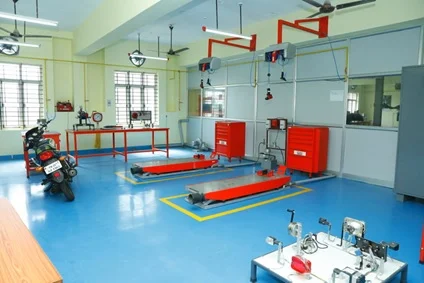
A Two-Wheeler Laboratory is a practical learning facility where students study the construction, operation, maintenance, and repair of two-wheeler vehicles such as motorcycles and scooters. The laboratory provides hands-on experience with various vehicle systems, including the engine, transmission, braking system, suspension system, electrical system, fuel system, and chassis. Students learn the working principles of two-wheelers, identify vehicle components, perform servicing operations, diagnose faults, and carry out repair and maintenance work. The laboratory also provides training in brake and disc brake adjustment, engine oil replacement, battery maintenance, and the proper use of dynamos and batteries.
The laboratory is equipped with performance testing equipment such as chassis dynamometers and suspension test rigs to measure power output, torque, fuel efficiency, and emission levels. Students gain practical experience in dismantling and assembling two-wheelers, understanding transmission systems and chassis construction, and performing routine service procedures.
The main objective of the laboratory is to develop technical skills, improve understanding of vehicle operation, and prepare students for careers in the automotive and agricultural engineering industries. It also helps students learn effective methods for maintaining and servicing two-wheelers to ensure safe, efficient, and reliable vehicle performance.
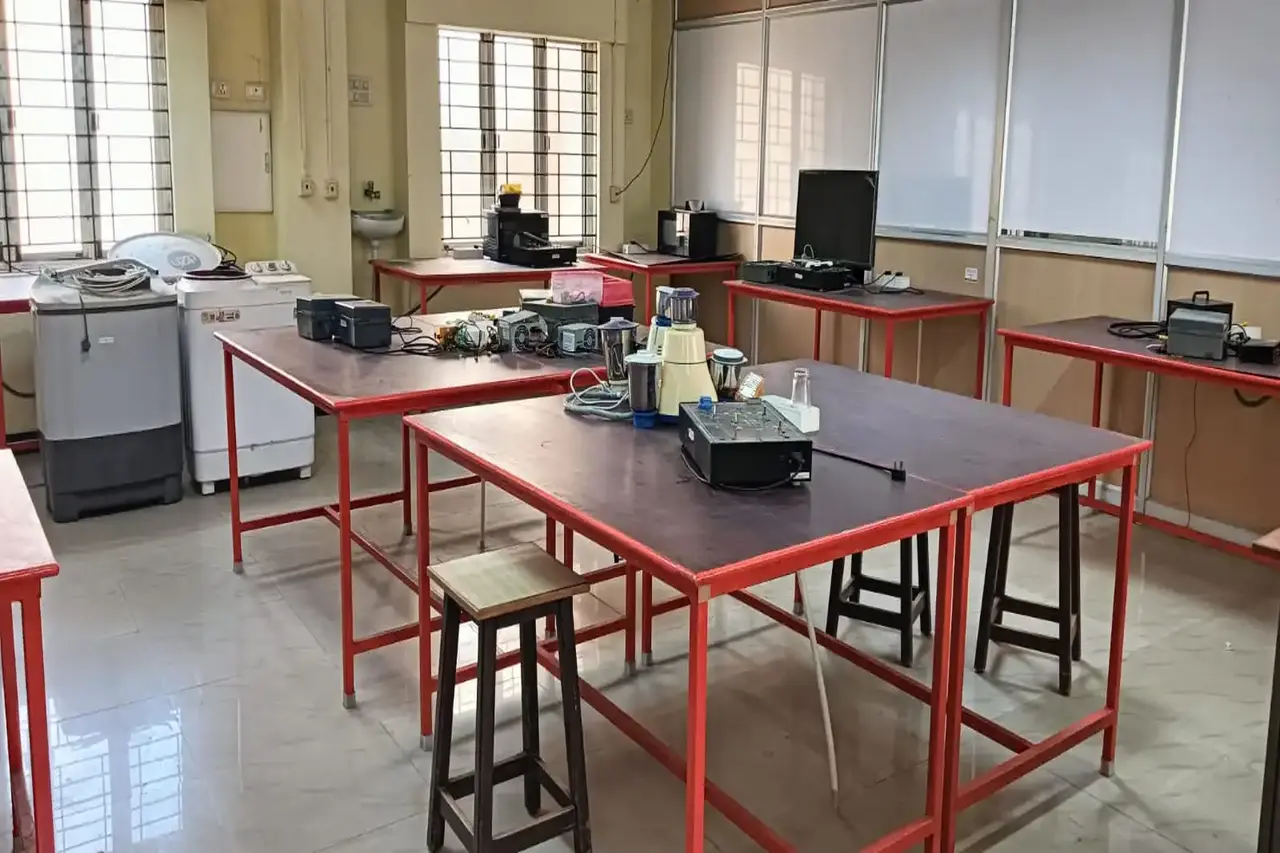
ELECTRONICS (HOME LAB)- t-SDI (TNSDC)
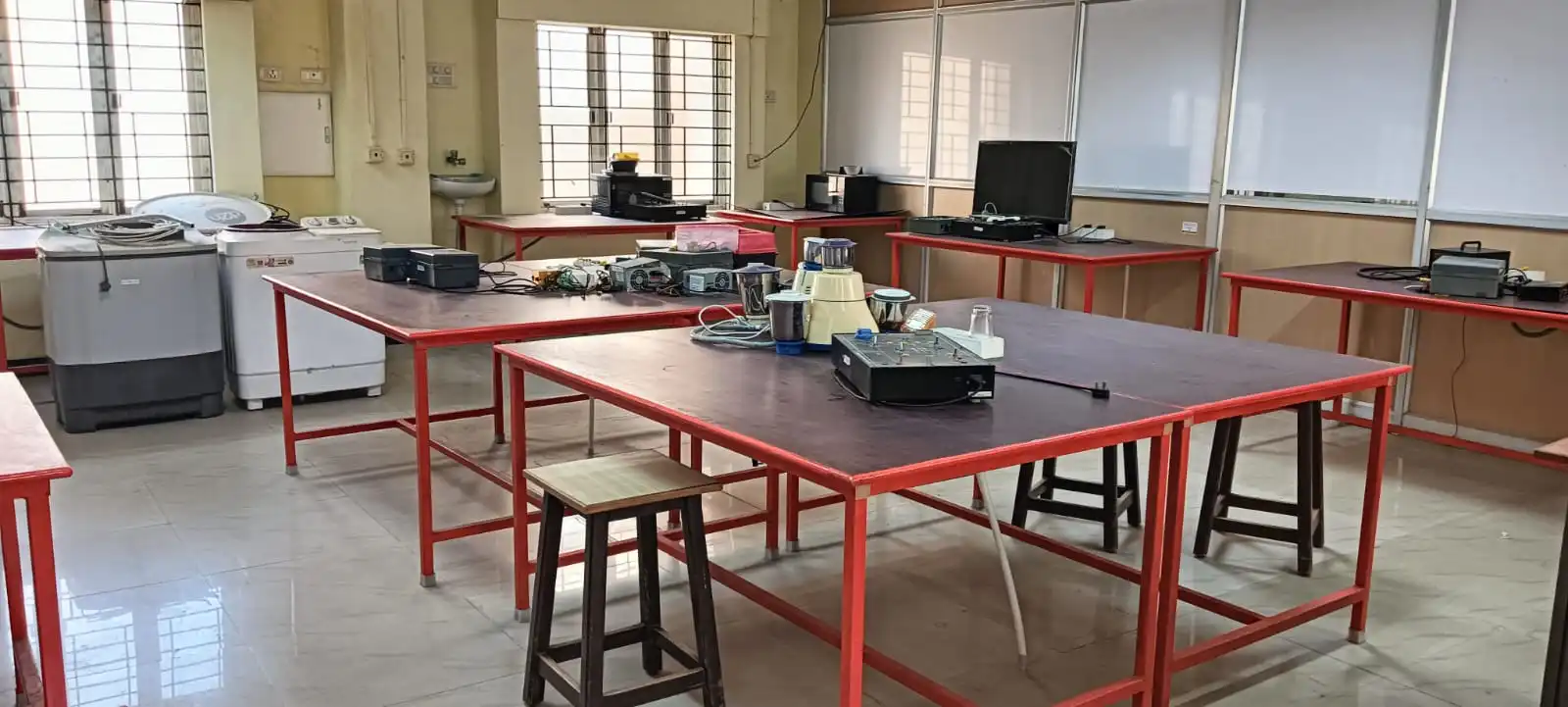
The Home Electronics Laboratory is a modern training center that teaches students how everyday household appliances and consumer gadgets are designed, wired, and repaired. In today’s world of smart homes, this lab helps students understand the complex circuit boards, small computer chips, and power components found inside everyday home electronics. By working with specialized training kits, students move away from simple paper diagrams and work directly with real hardware, learning how to safely find broken parts, fix power issues, and make electronics run efficiently.
The training teaches students about power supplies and safety systems, showing them how home electronics turn alternating current (AC) wall power into safe direct current (DC) power using special components like Switched-Mode Power Supplies (SMPS) and rectifiers, while also teaching them how to wire safety boards and surge protectors. Students get to look inside and study the mechanical layouts and controls of important household devices, such as microwave ovens, mixer grinders, induction stoves, and automatic washing machines. They also study how screens work by examining the control circuits and settings of modern LED TVs and liquid crystal displays. Beyond home appliances, the course covers communication systems by teaching students how to set up and adjust satellite television Dish boxes and receiver units to get a clear signal.
It also covers mobile phone hardware engineering, where students explore the internal layout, radio antennas, battery systems, and repair methods for mobile phones. The ultimate goal of the Home Electronics Laboratory is to train skilled electronics technicians and engineers who can build, test, and repair consumer goods, giving them the exact skills needed to work in electronics manufacturing, testing centers, or to start their own repair businesses.
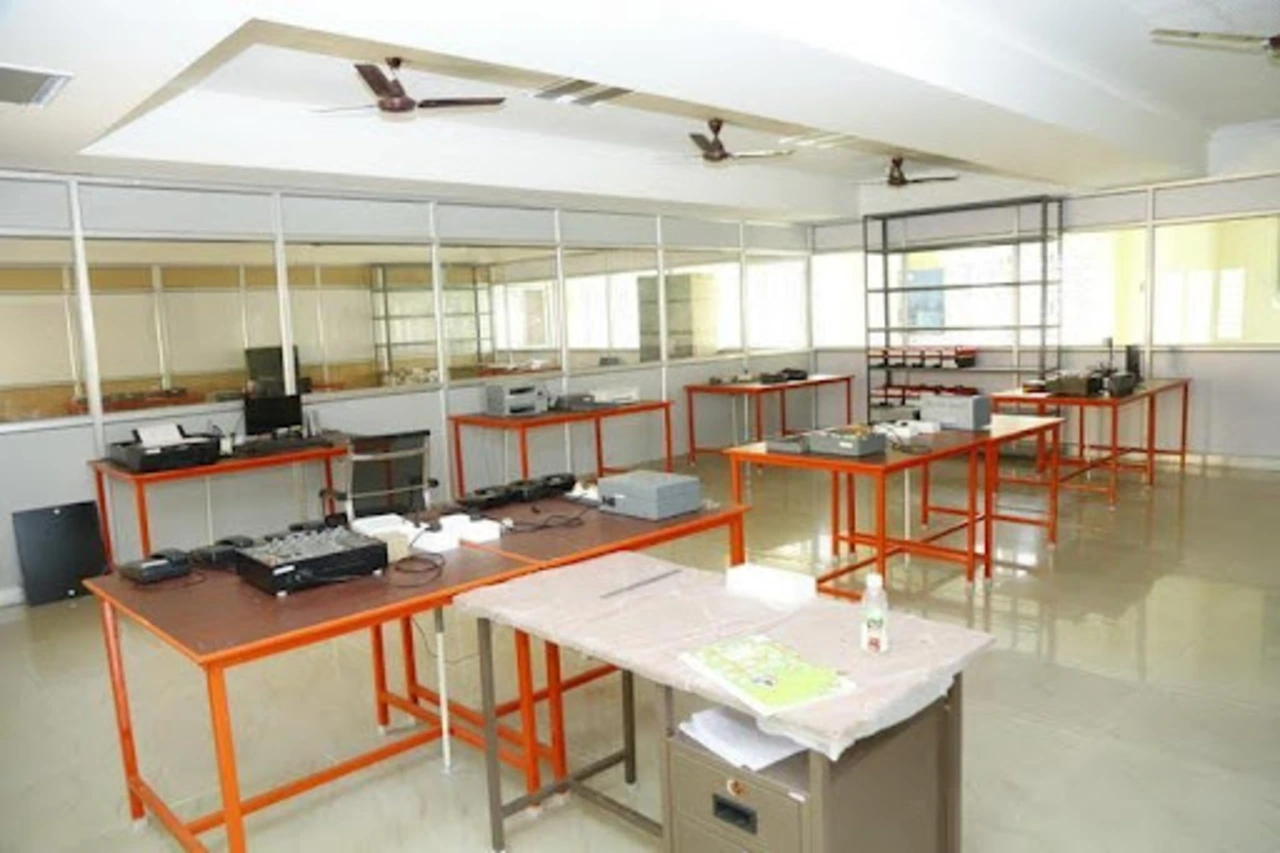
ELECTRONICS (OFFICE LAB) - t-SDI (TNSDC)
The Office Electronics & Computer Laboratory is a specialized technical facility that trains students to install, connect, maintain, and repair corporate computer networks, office gadgets, and business tech infrastructure. This lab gives students a realistic environment to study how computers are set up, how automated office tools work, and how security camera networks are wired together. Through practical, hands-on classes, students learn how to build circuit boards, fix office equipment, and connect telephone lines, matching the exact needs of modern corporate IT departments.
A large part of the course focuses on computer and laptop hardware engineering, where students learn to identify and swap out the main internal parts of desktop computers and laptops, including motherboards, processors, RAM modules, hard drives, solid-state drives, and graphics cards. Students also study power backup and UPS systems to learn how Uninterruptible Power Supplies keep computers running safely by using battery charging circuits and automatic switches when the main building power goes out. Security and communication are major highlights of the course, giving students direct practice installing, wiring, and setting up closed-circuit television (CCTV) security networks, digital video recorders (DVRs), and office intercom telephone lines. Additionally, students handle office equipment maintenance, learning the inner mechanics of laser and inkjet printers, how to change ink cartridges and toner units, how to clear paper jams, and how to connect printers to an office network.
The training is rounded out by teaching students professional soldering and desoldering methods using heat tools to safely swap out broken chips, capacitors, and tiny components on electronic circuit boards. The main goal of the Office Electronics & Computer Laboratory is to connect computer science theory with real electronic hardware, helping students get ready for the workforce by teaching them advanced troubleshooting skills for network setup, hardware repair, and system configuration.

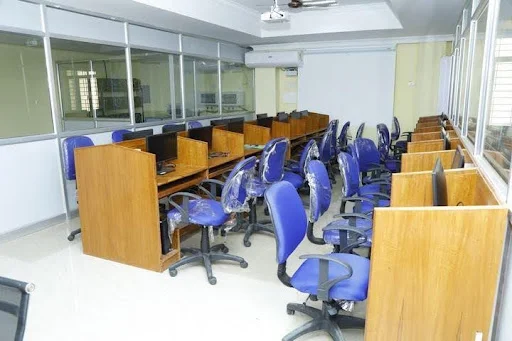
COMPUTER BASED TRAINING LAB t-SDI (TNSDC)
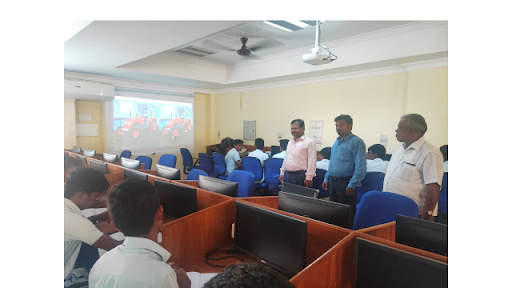
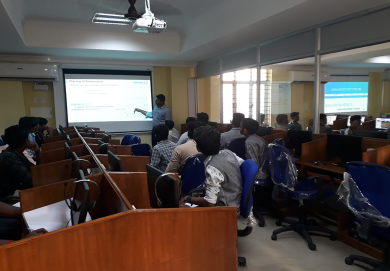
A Computer Based Training (CBT) Laboratory is a specialized learning facility equipped with computers, software, and internet resources to provide interactive and technology-based education and training. It enables students to learn theoretical and practical concepts through various simulation software, multimedia presentations, and online assessments.
The CBT laboratory helps students develop computer-based technical skills, problem-solving abilities, and self-learning habits. It provides a modern learning environment where students can access and practice different software applications.This laboratory provides effective training for students from various branches of engineering, such as Mechanical Engineering, Information Technology, Computer Engineering, Electronics Engineering, and others.
We offer training in simulation software such as Tecnomatix Plant Simulation for Mechanical Engineering students. Training is also provided in programming languages such as Python, C++, and Java, enabling students to perform testing, analysis, and problem-solving using different software tools.This training enhances students’ practical knowledge, technical competency, and industry readiness, helping them meet the requirements of various industries and professional environments.
Summer & Winter Internship Programmes
2-Week Practical Training (60 Hours Total)
We offer short, powerful training programs during college vacations. This training helps you understand everyday technology and improves your engineering knowledge.
Quick Details
1
Who can join?
Any Engineering Degree student who has finished at least 2 semesters.
2
How is it tested?
Students will take a simple test or do a small project, followed by a viva (oral test) at the end.
3
Certificate
Successful students get an official certificate signed by the Dean of UCEV and the TNSDC Coordinator
Training Courses You Can Choose:
Course 1: Mechanical Engineering (Code: SS1P01)
Total Time: 60 Hours (Divided into 3 labs)
AGRICULTURE MACHINERY LAB
(20 Hours)
- Learn how to drive a tractor at different speeds.
- Learn how to test car and tractor batteries.
- Look inside a real tractor engine model to see how it works.
- Use a machine to cut grass and crops to different sizes.
- Learn how drip irrigation systems water fields under different pressures.
- Learn how to test soil and water quality using simple kits.
AUTO LAB FOUR WHEELER
(20 Hours)
- See how a car's electrical wires and systems work using a clear model.
- See how car cooling parts (radiators) work inside.
- Learn how to use professional garage machines to balance wheels, align tires, and change tires.
- Learn how to test car exhaust smoke for pollution
- Practice taking a car apart and putting it back together.
AUTO LAB TWO WHEELER
(20 Hours)
- Learn how to change bike engine oil and check its quality.
- Learn how to check and fix spark plugs.
- Learn how to tighten and look after a motorcycle drive chain.
- Learn how to adjust brakes safely.
- Learn how to tune a bike's fuel system so it runs smoothly.
Course 2: Electronics & Communication Engineering (Code: SS1P02)
Total Time: 60 Hours (Divided into 2 labs)
Learn how common home appliances work and how to fix them using special training kits:
Home Electronics Lab
(30 Hours)
- Power plugs and electrical safety boards.
- Power supplies (SMPS and rectifiers).
- Setup and working of Dish TV (DTH) boxes.
- Inside parts of Microwave Ovens and Mixer Grinders.
- How Washing Machines and LED TVs control their settings.
- How mobile phones are designed and tested.
Office Electronics & Computer Lab
(30 Hours)
- Learn the main parts inside a desktop computer and a laptop.
- Learn how a Backup Power System (UPS) keeps computers running when the electricity goes out.
- See how security cameras (CCTV) and office intercom phones are connected.
- Learn how printers work, how to change ink/toner, and how to connect them to a computer.
- Practice professional soldering and desoldering to fix electronic circuit boards.
TNSDC - Equipments Details
AUTO FOUR WHEELER LAB
TWO POST CAR LIFT
Technical parameter
Model : Two post 4.0T
Rated load : 4000 Kg
Raising and Falling time : 40-60s
Hoist height : 1900mm
Hydraulic oil : N46#
Electric Power : 2.2KW
Rated oil Pressure : 20-22 Mpa
Function:
To lift and down the car
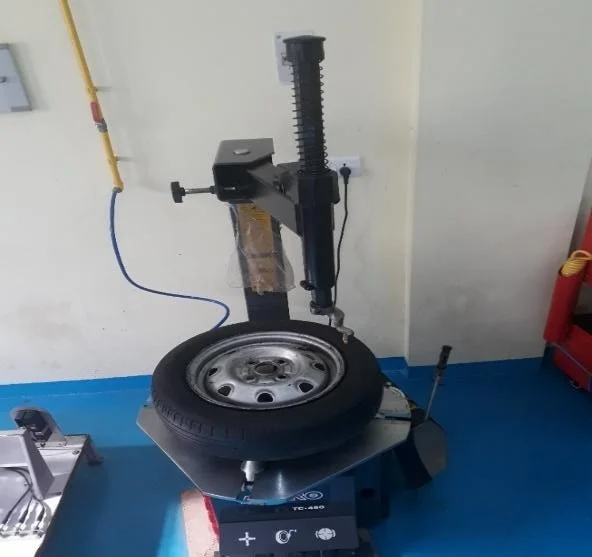
TYER CHANGER MACHINE
Technical parameter
Overall Dimension L*B*H(mm) : 1150*950*1000
Air supply pressure : 8-10 Bar
Wheel diameter(min-max) : 980mm-1100mm
Clamped by : Clamping jaw
Clamp style : Pneumatic
Torque (Turntable) : 1100 Nm
Function
Easy to Remove and fit the tyre and rim
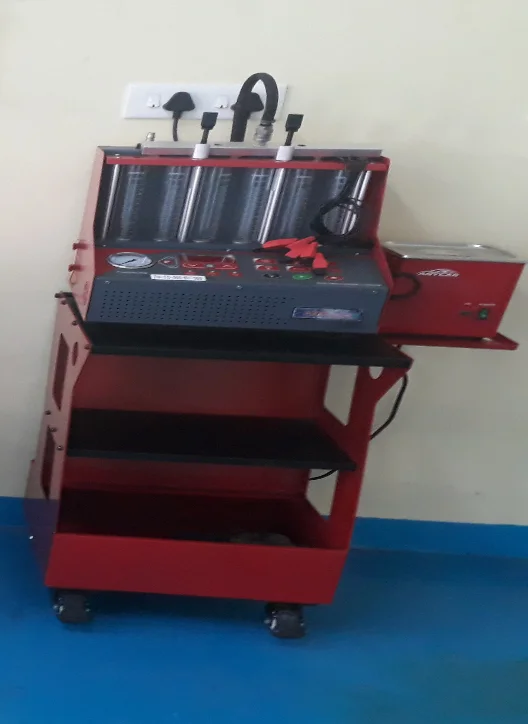
ULTRASONIC INJECTION CLEANING EQUIPMENT
Technical parameter
Input power : 230 W
Ultrasonic cleaner power : 60 W
Simulate RPM range : 100-9900rpm, step : 100rpm
Time range : 60-5400s, step : 60s
Pulse width : 0.5-25ms, 0.1ms
No of injectors : max : 6, min :1
Fuel : petrol
Function
To test pressure, Leakage and spray
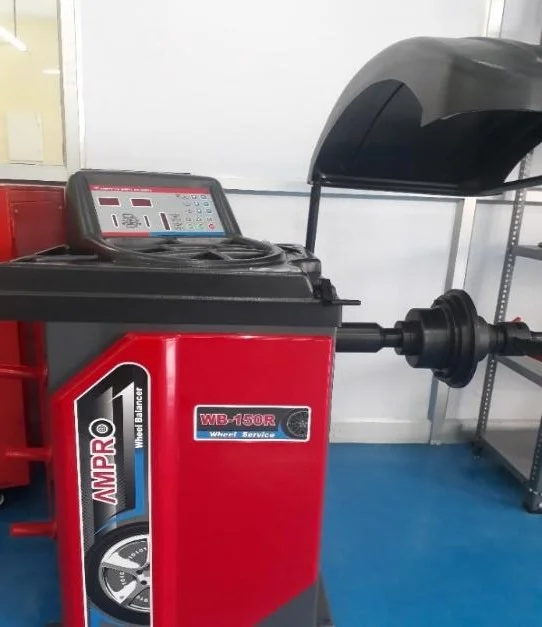
WHEEL BALANCING MACHINE
Technical parameter
wheel RIM dia : 10 to 22 inch
wheel RIM with : 1.5 to 12 inch
wheel distance : 25 to 300 mm
wheel weight : 65 Kg
Normal mode : 5 GM
RE clamping accuracy : 10 to 15 GM (up to 14 wheel)
Position accuracy deg : 2.9
Balance speed : 190 RPM
Motor : 0.5 HP / single phase / 960 RPM
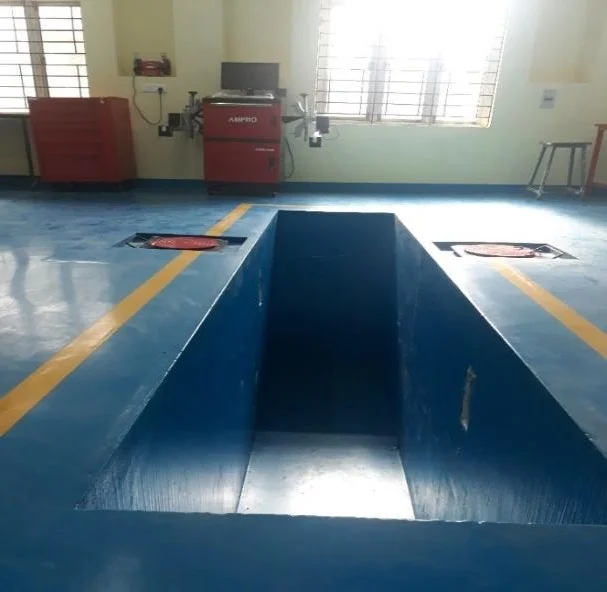
WHEEL ALIGNMENT SECTION
Technical parameter
Front Total Toe-in ±4′ (±0.02°) ± 200
Camber ±2′ (±0.01°) ± 200
Caster ±6′ (±0.1°) ± 200
SAI/ KPI ±6′ (±0.1°) ± 200
Setback ±2′ (±0.03°) ± 50
Thrust Angle ±2′ (±0.03°) ± 60
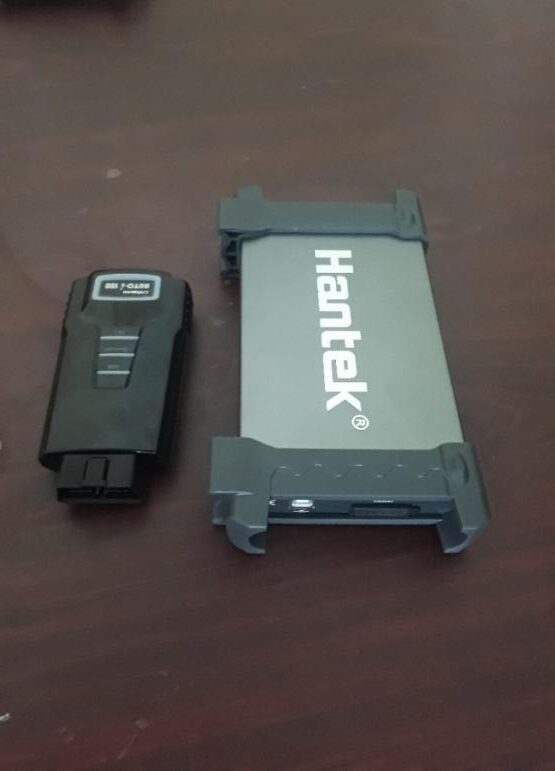
Multi Scan Tool and oscilloscope
WHEEL ALIGNMENT FUNCTIONS
Functions
- DTC reading and explanation.
- DTC erasing.
- Current data view (parameters and graphic mode).
- Manual parameter’s grouping.
- Activation
- Parameter graphic comparison.
- Flight record.
- System identification.
- Adaptations, sensor calibrations, resetting and other special functions.
- Service resetting.
- Keys, remotes, injector and other components programming.
AUTOMOTIVE EXHAUST 4 GAS ANALYSER
TECHNICAL PARAMETER
Min and normal flow rate : 1.5lpm to 6lpm
Measuring
CO : 10.50% vol
CO2 : 21.07% vol
HC : 20000 ppm (propane)
O2 : 21.7% vol
Nox : 5000 ppm
LAMBDA : 0 – 9.999
Oxygen sensor modal : TAI222A
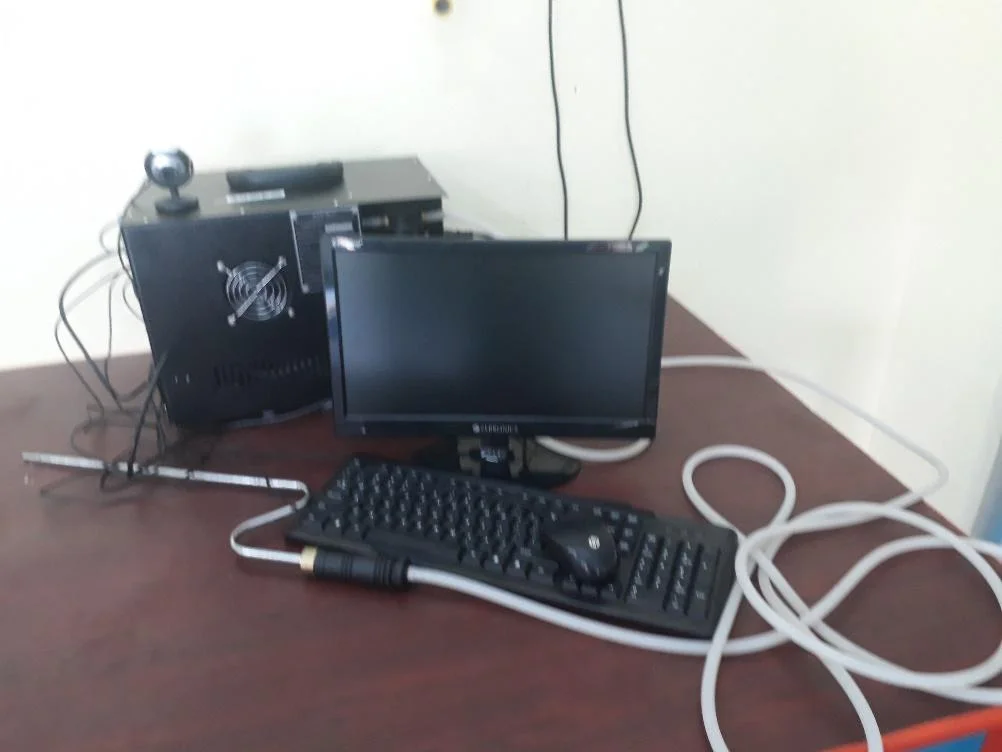
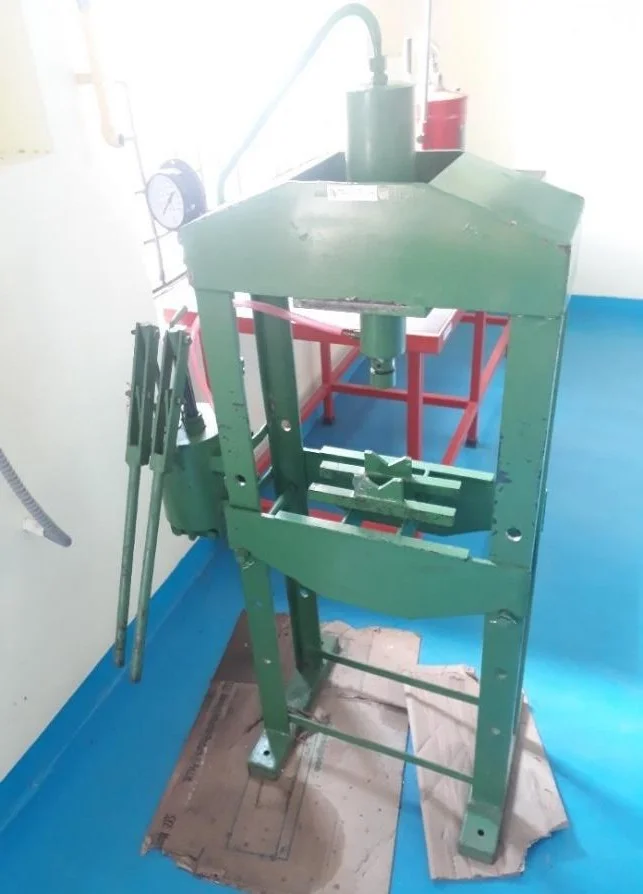
HAND OPERATED HYDRAULIC PRESS
Technical parameter
HYDRULIC POWER : 4Ton/ sq in
The Press is provided within a 2 stage hand pump. The low pressure pump is used for rapid advance of piston at low pressure. The high pressure Pump is provided with a special material lining and is used for slow advance at high pressure.
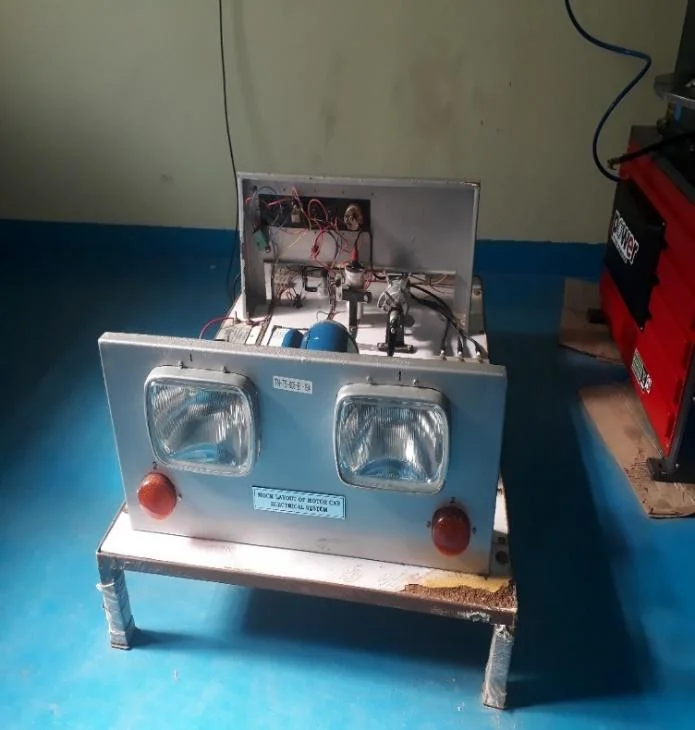
MOCK LAYOUT OF A MOTOR CAR- ELECTRICAL SYSTEM WORKING MODEL
Parts
- Self starter
- Alternator Mortised
- Horn
- indicator
- Headlights with head light spark plug,
- Parking lamps
- Side indicators
- Brake light
- Distributor
- Sparks of spark plugs
- Battery
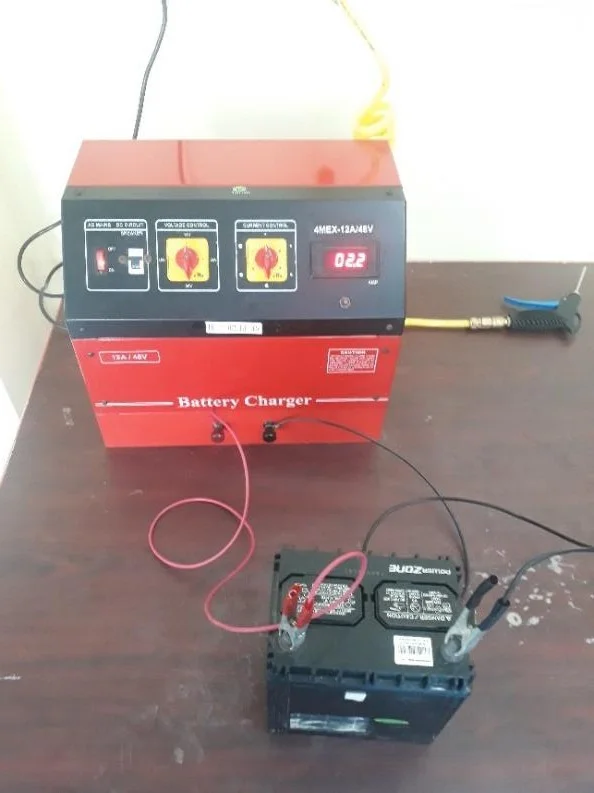
BATTERY CHARGER
Technical parameter
Battery charger 48V 12A
Batteries can be charged manually with a power supply featuring user-adjustable voltage and current limiting
AUTO TWO WHEELER LAB
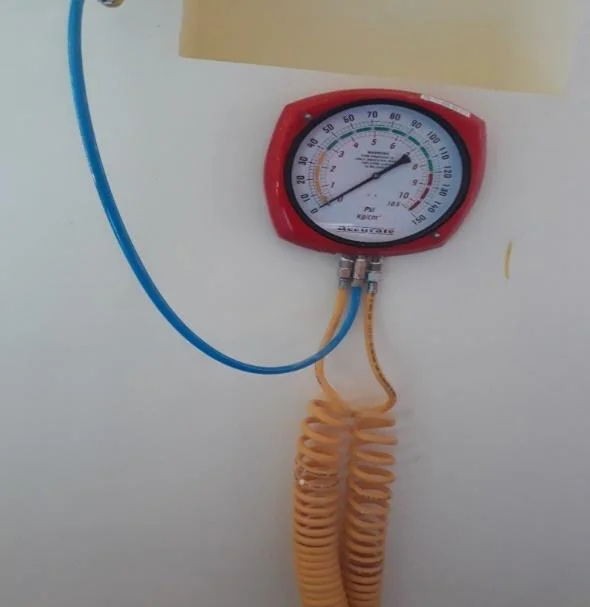
PRESSURE GAUGE
- Dial Size: 6″ (150mm)
- Movement: SS Rotary Geared with Overload/ Underload Stops
- Lens: Laminated Safety Glass
- Dial: Heavy Gage Aluminium
- Scales: psi (metric available)
- Fillable: Rubber membrane included
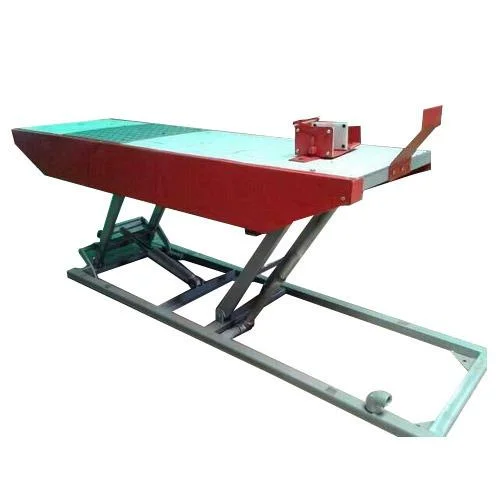
HYDRAULIC LIFT
- Load capacity : 1-2 ton
- Body material : mild steel
- Lifting time : 60 sec
- Locking system : manual
- No of guide post : two
- Max height : 4 feet
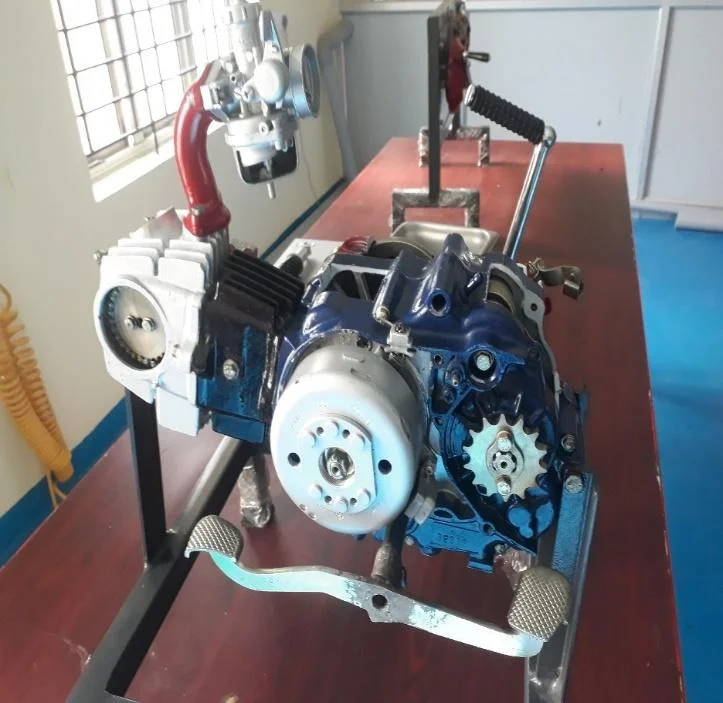
ENGINE CROSS SECTION
- No of cylinder : single
- No of stroke : four stroke
- No of gear : four gear
- Engine material : cast iron
- Carburator
- Sparkplug
- Alternator
- Flywheel
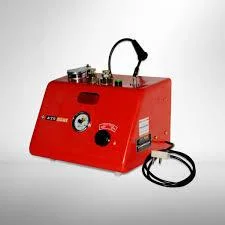
SPARK PLUG CLEANER
- Structure made of resin molded fiber canopy
- Minimum pressure of 7kg/cm which is essential for cleaning plug .
- Electronics Vibrator : 220V / 12V
- Input voltage : 220V, AC, 50 Hz
- Working Pressure : 5kgf/cm -12kgf/cm 2 2
ELECTRONICS (HOME & OFFICE LAB)
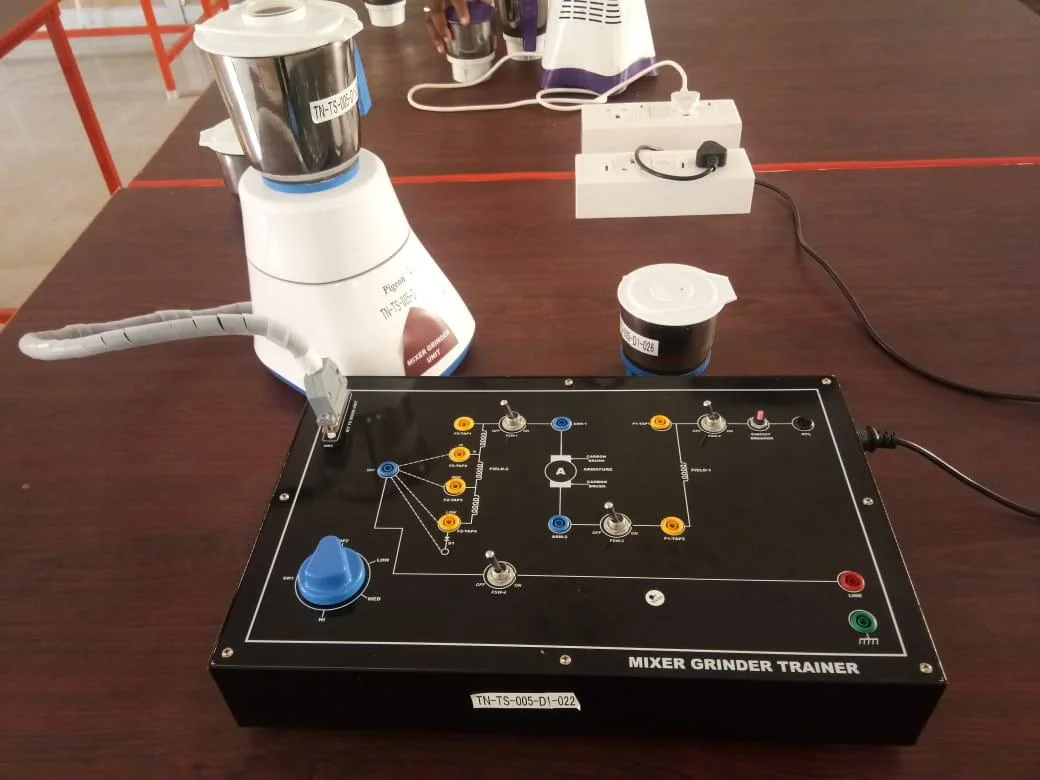
MIXER GRINDER
- To process livestock feed from grain farmers often use a type of agricultural machine called a grinder-mixer. A grinder-mixer is a portable mill that combines the mixing and grinding operations.
- Wattage and Other Features. Don’t settle for a stand mixer with less than 250 watts of power.
- Input Power : 750 Watt.
Voltage : 230 V 50 Hz.
Current : 0.95 – 1.1 A.
Speed : 16500 – 20000 rpm (3 speed)
Rating : 30 Minutes.
Insulation : Class B.
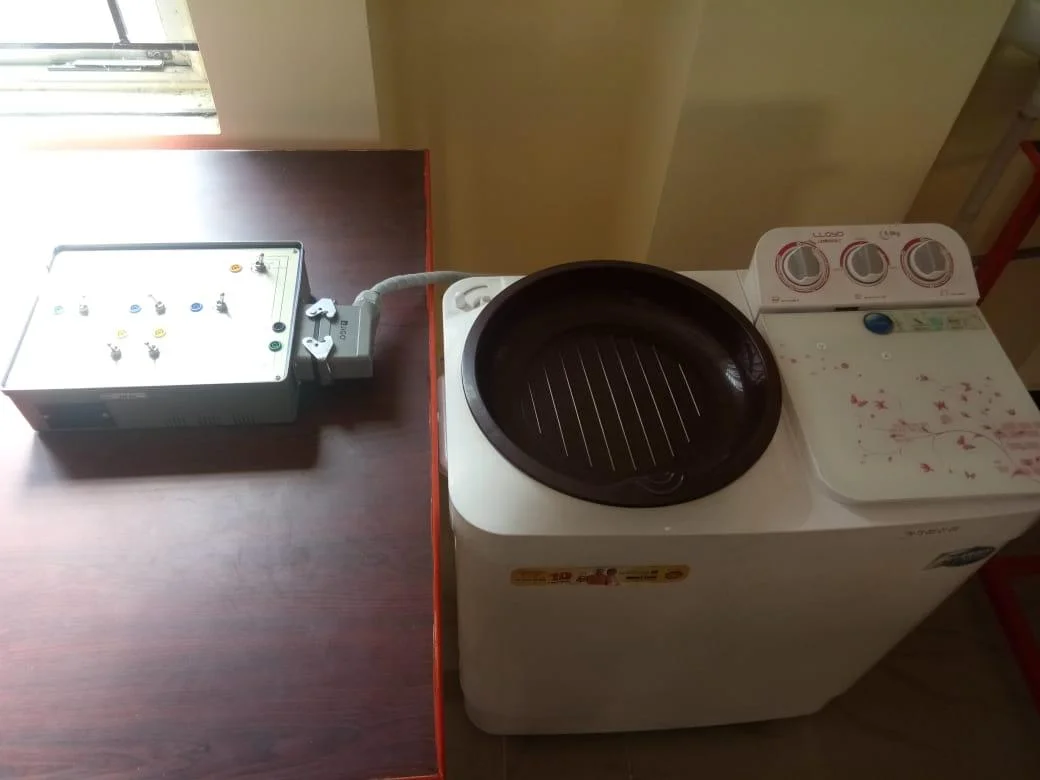
WASHING MACHINE
Phase: single phase
motor voltage: 220 volt
speed :1325 rpm
power (watts or hp): 110 watt
Phase: single phase
motor voltage: 220 volt
speed :1325 rpm
power (watts or hp): 110 watt
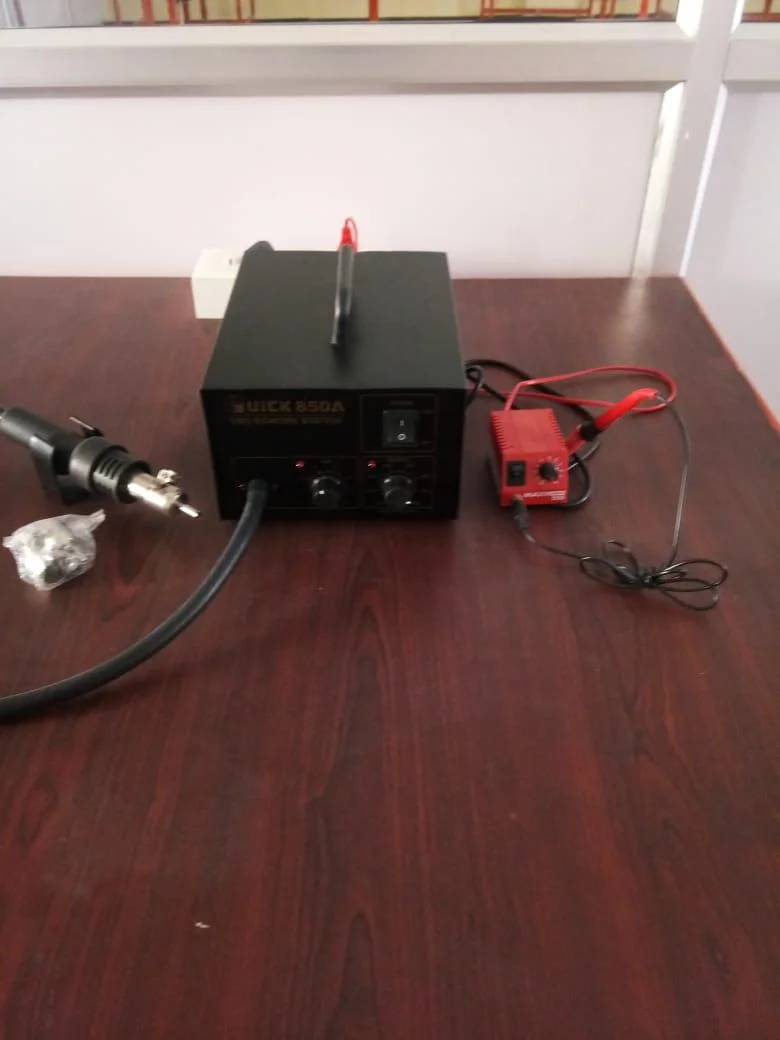
Soldering iron
- A soldering iron is a hand tool used in soldering . It supplies heat to melt solder so that it can flow into the joint between two work pieces.
- A soldering iron is composed of a heated metal tip and an insulated handle. Heating is often achieved electrically, by passing an electric current (supplied through an electrical cord or battery cables) through a resistive heating element. Cordless irons can be heated by combustion of gas stored in a small tank, often using a catalytic heater rather than a flame.
- Soldering irons are most often used for installation, repairs, and limited production work in electronics assembly. High-volume production lines use other soldering methods
- A catalytic heater is a type of heater which relies on catalysed chemical reactions to break down molecules and produce heat.
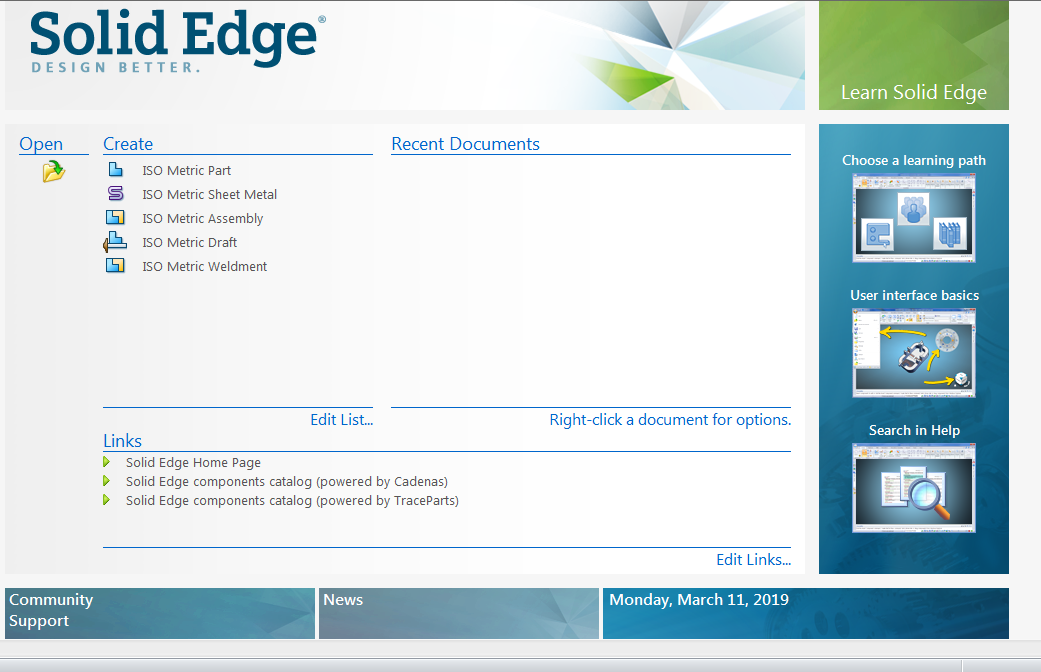
COMPUTER BASED LAB
DESIGN COURSES
- SOLID EDGE ST8
- SIEMENS NX 10.0
AGRICULTURAL MACHINERY LAB
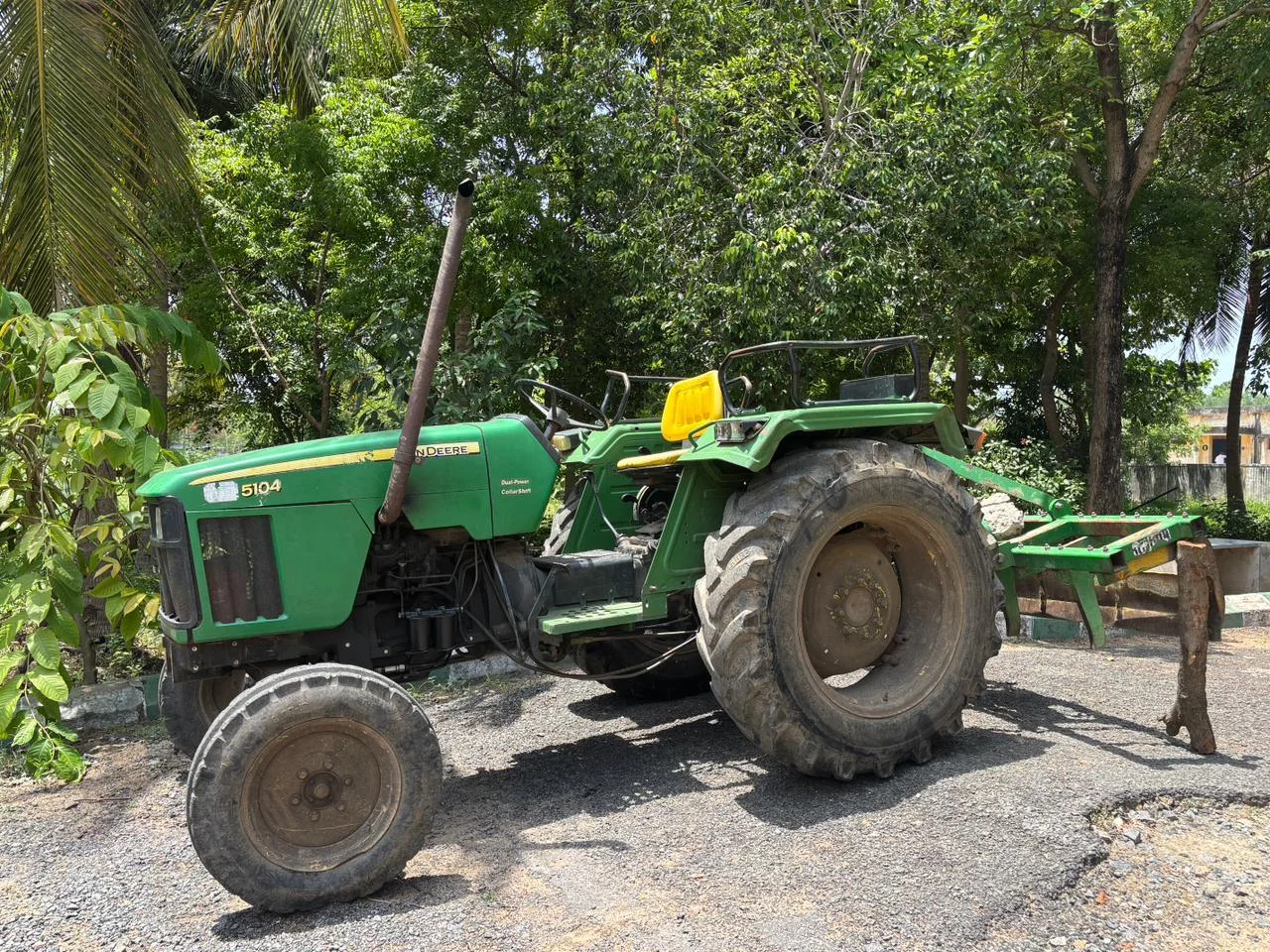
TRACTOR
Specifications & Configuration
- Model:5104
- Engine: John Deere 3-cylinder, 45 HP (33.6 kW @ 2300 RPM) diesel engine.
- Drive System: 4×2 (2-Wheel Drive)
- Transmission: Collar shift (usually 12 forward and 3 reverse gears)
- Brakes: Oil-immersed disc brakes
- Steering: Power steering
- Hydraulics: hydraulic pump with a lifting capacity of approximately 1,600 kg to 1,800 kg
- Fuel Tank: 62 liters
- Wheelbase: 76.8 inches (195 cm)
- Total Weight: 4,023 lbs (1,824 kg)
- Ground Clearance: 15.75 inches (40 cm)
- Front Tire: 6.0 x 16
- Rear Tire: 13.6 x 28
- Rear PTO: independent
- Rear RPM: 540 (1.375)
- Engine RPM: 540@2200
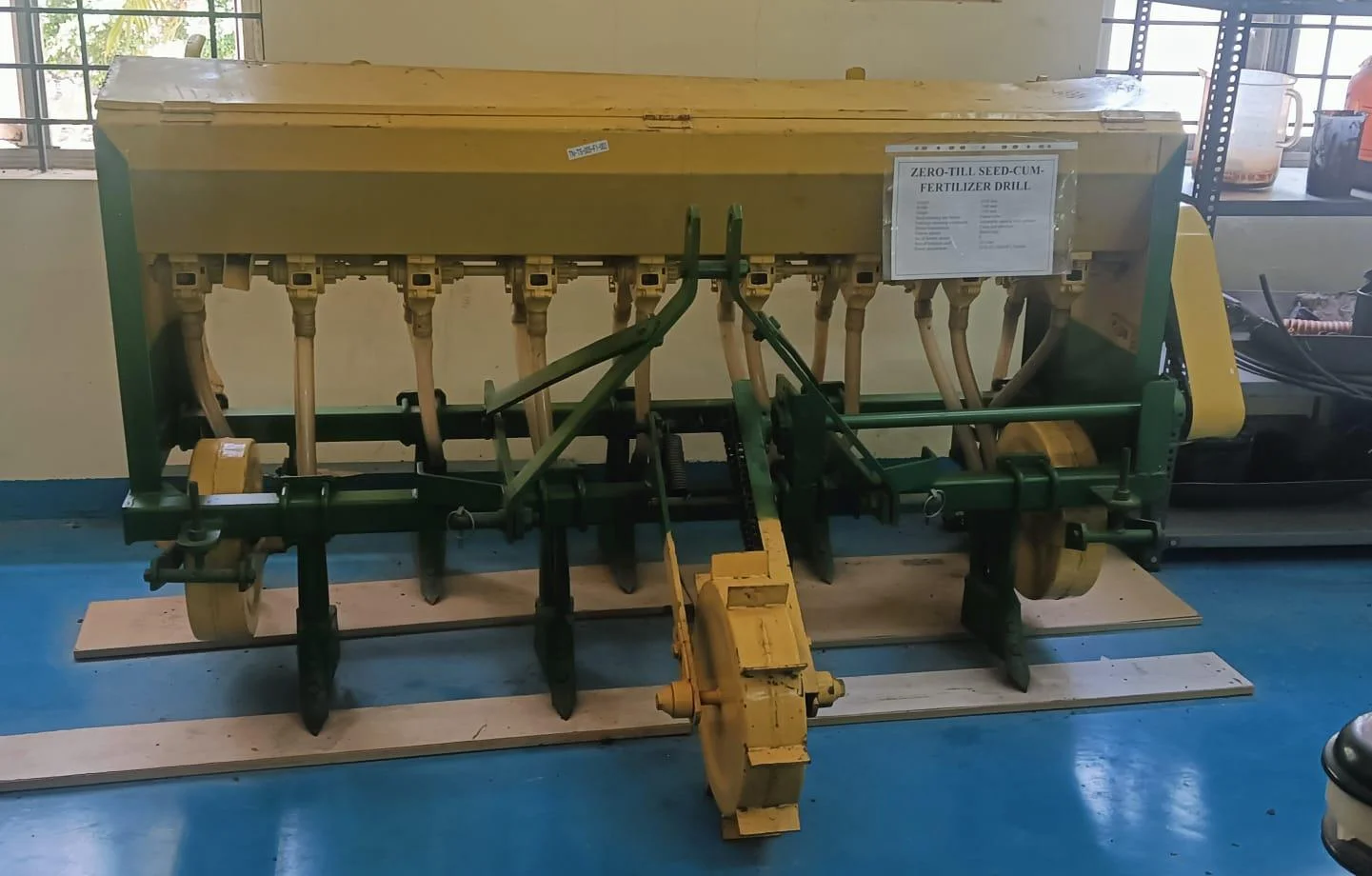
ZERO-TILL SEED –CUM FERTILIZER DRILL
Length : 2310 mm
Width : 1560 mm
Height : 1350 mm
Speed metering mechanism : Fluted roller
Fertilizer metering mechanism : Adjustable opening with agitator
Power transmission : Chain and sprockets
Furrow opener : Shovel type
No of furrow opener : 9
Size of fertilizer shaft : 22.3 mm
Power requirement : 35/26.25 (hp/kw)
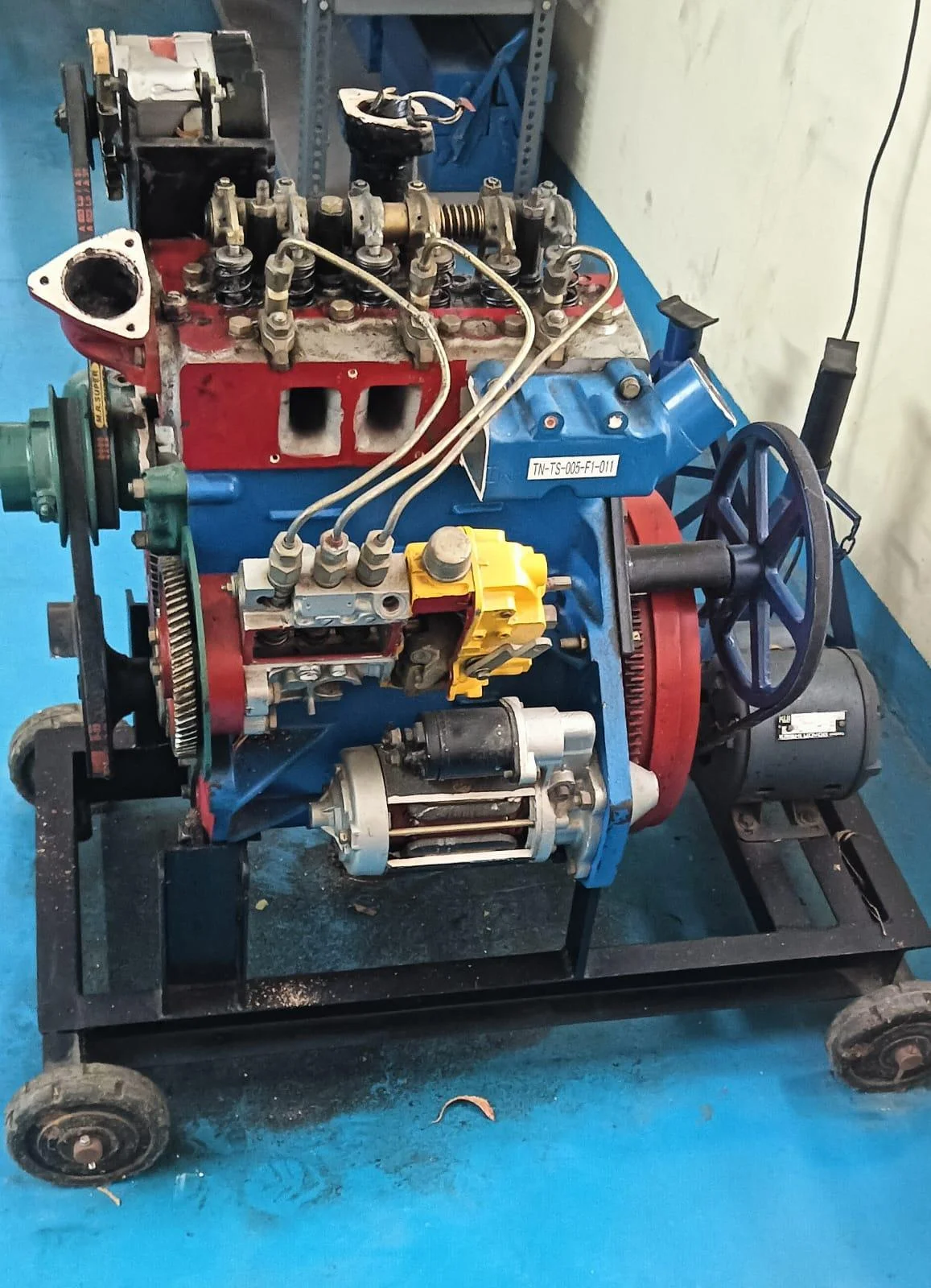
Tractor Engine cut section model
Engine power : 45 HP (33.6 kW)
Cylinders : 3
Fuel Capacity : 62 liters
Rated RPM : 2300 RPM
Displacement : 2900 cc
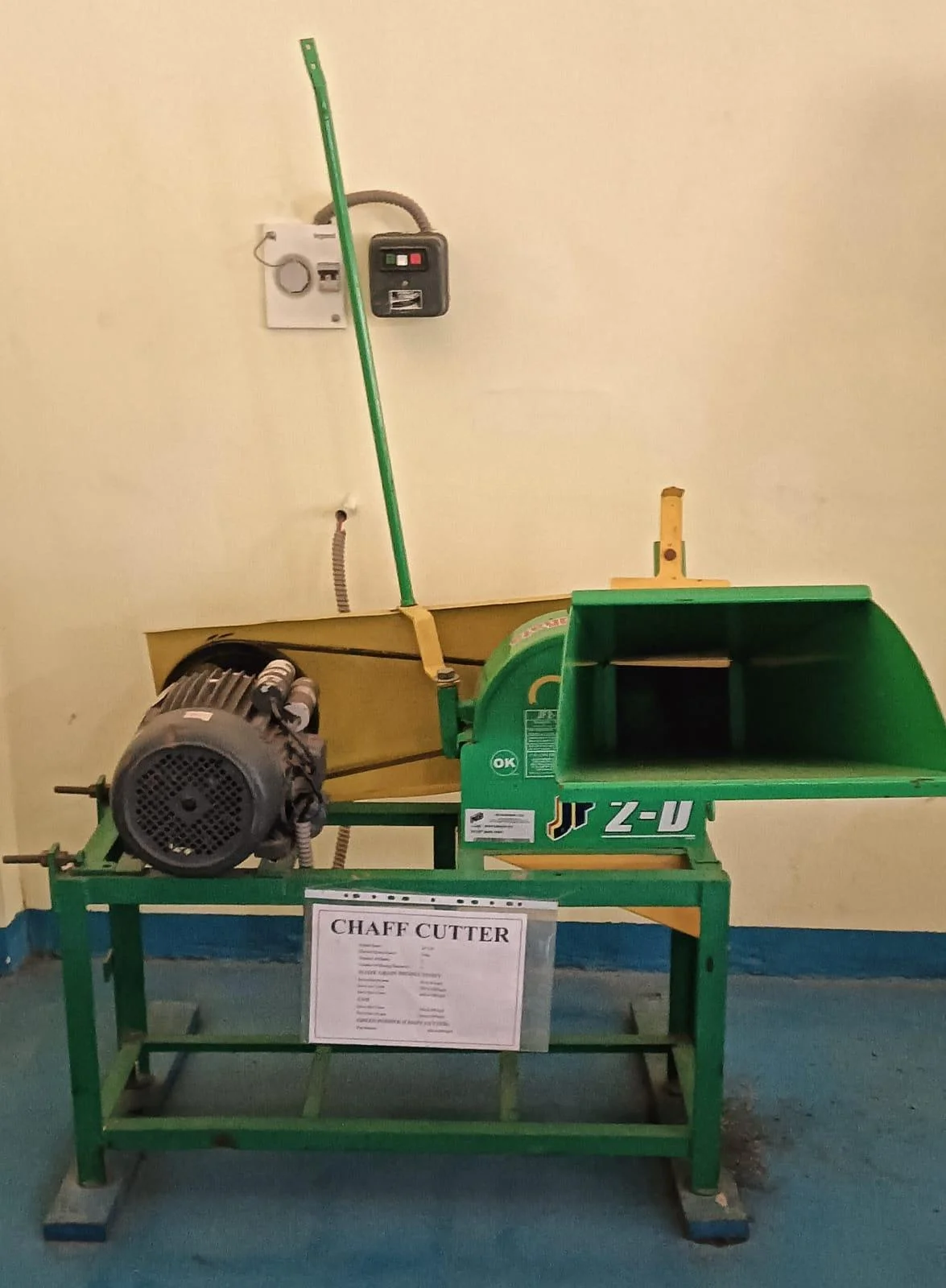
CHAFF CUTTER
Model Name : JF 2-D
Electric Motor Power : 2 Hp
Number of Blades : 2
Number of Moving Hammers : 6
MAIZE GRAIN PRODUCTIVITY
Sieve Size 0.8 mm : 50-65 kg/h
Sieve Size 0.3 mm :250 to 350 kg/h
Sieve Size 0.3 mm : 400 to 750 kg/h
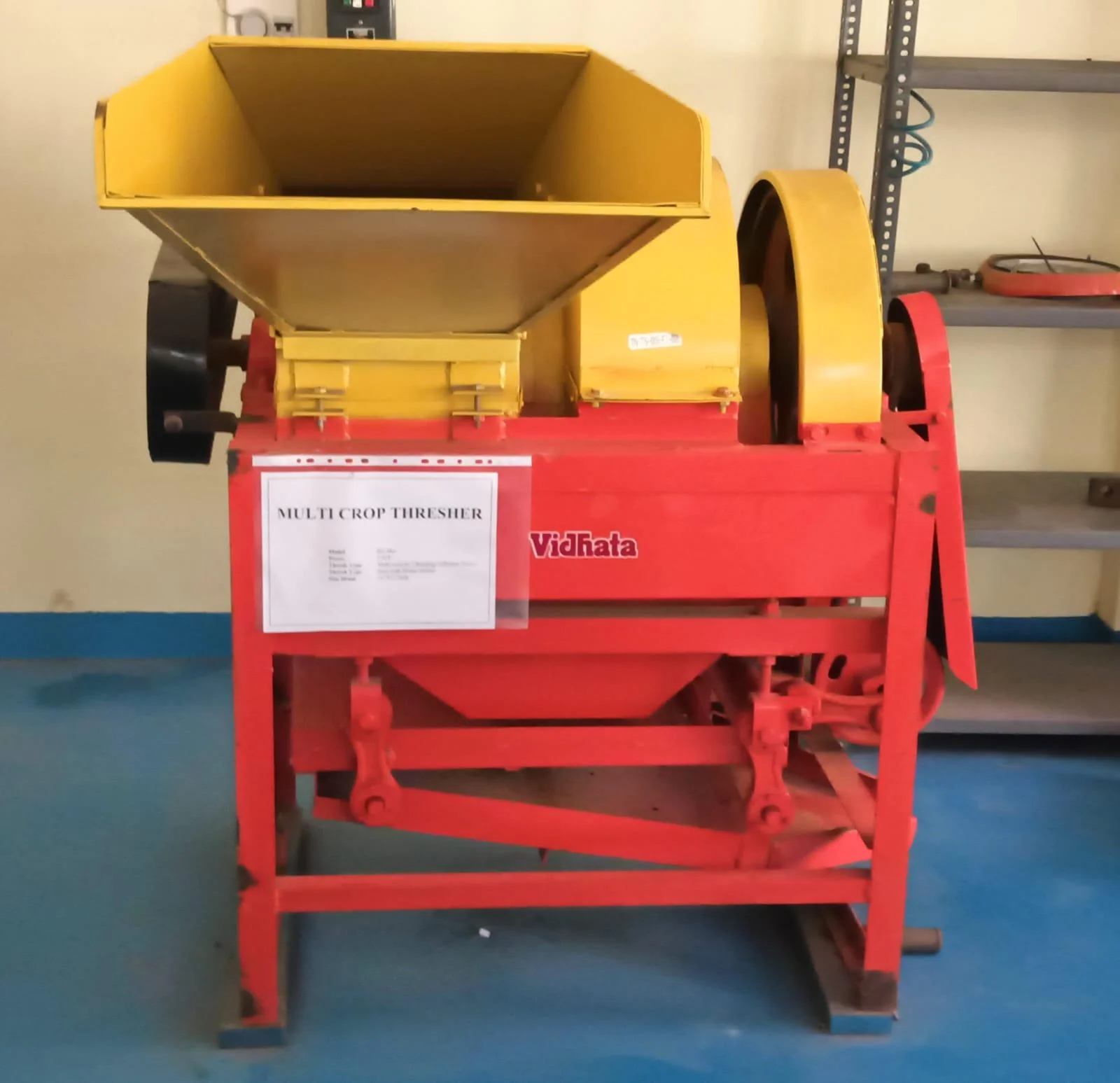
MULTICROP THRESHER
Model : B1-Met
Power : 5H.P
Thresh Type : Multi Crop by Changing Different sieves
Thresh types : Stud with beeter Blades
Size Drum : 14”X 27 inchs
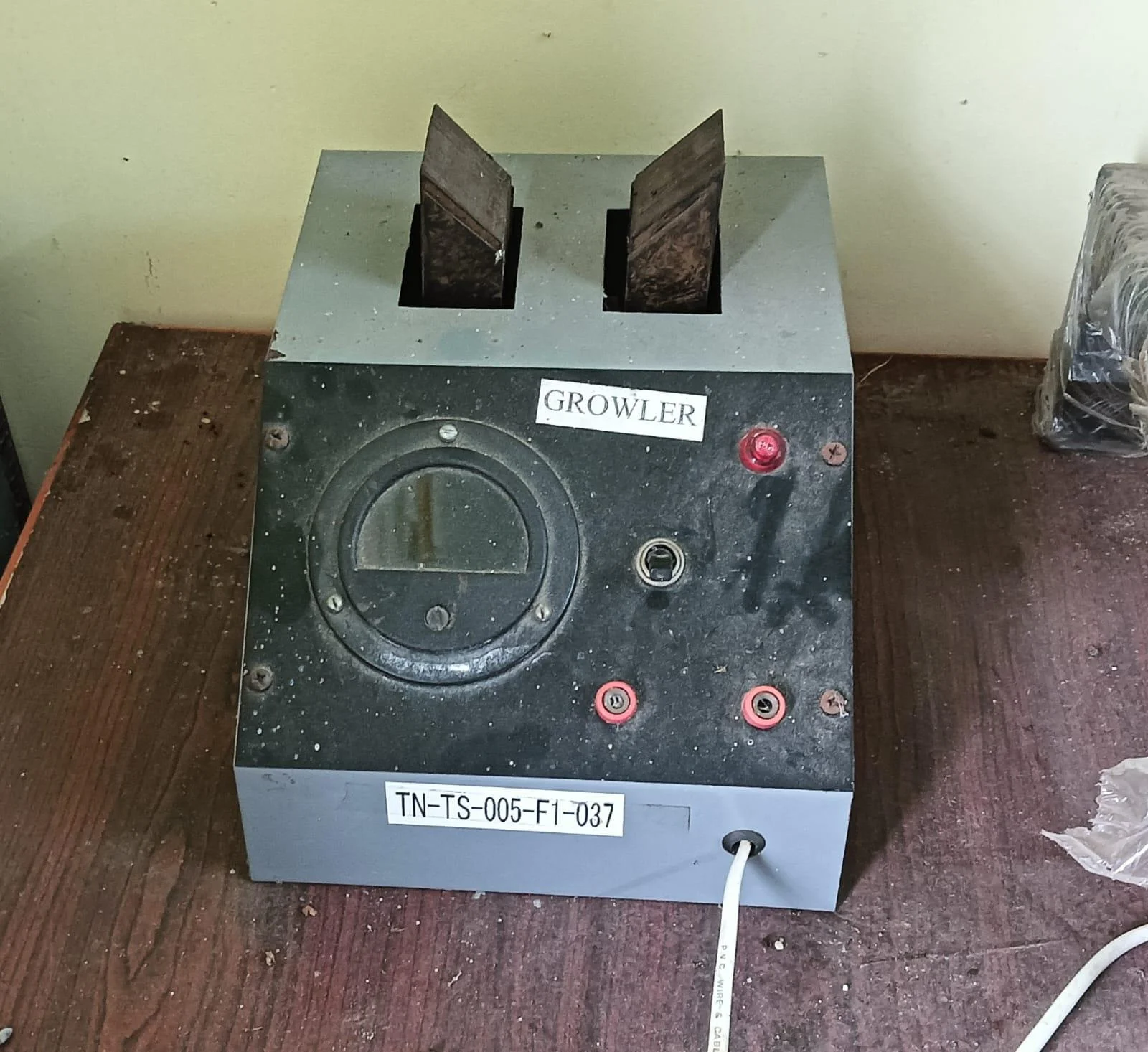
CROWLER
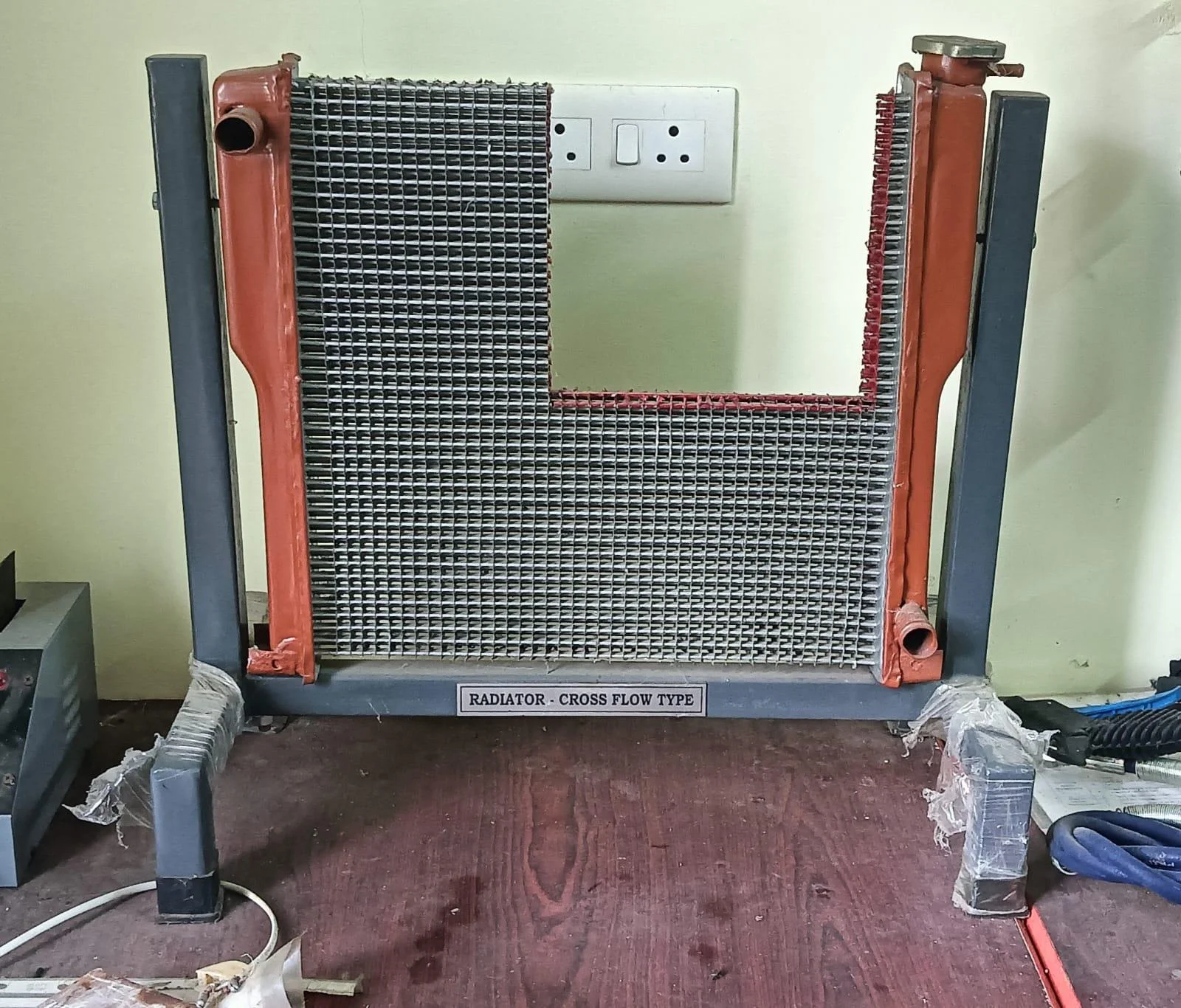
RADIATOR
Typse : cross flow type
Material : Aluminium
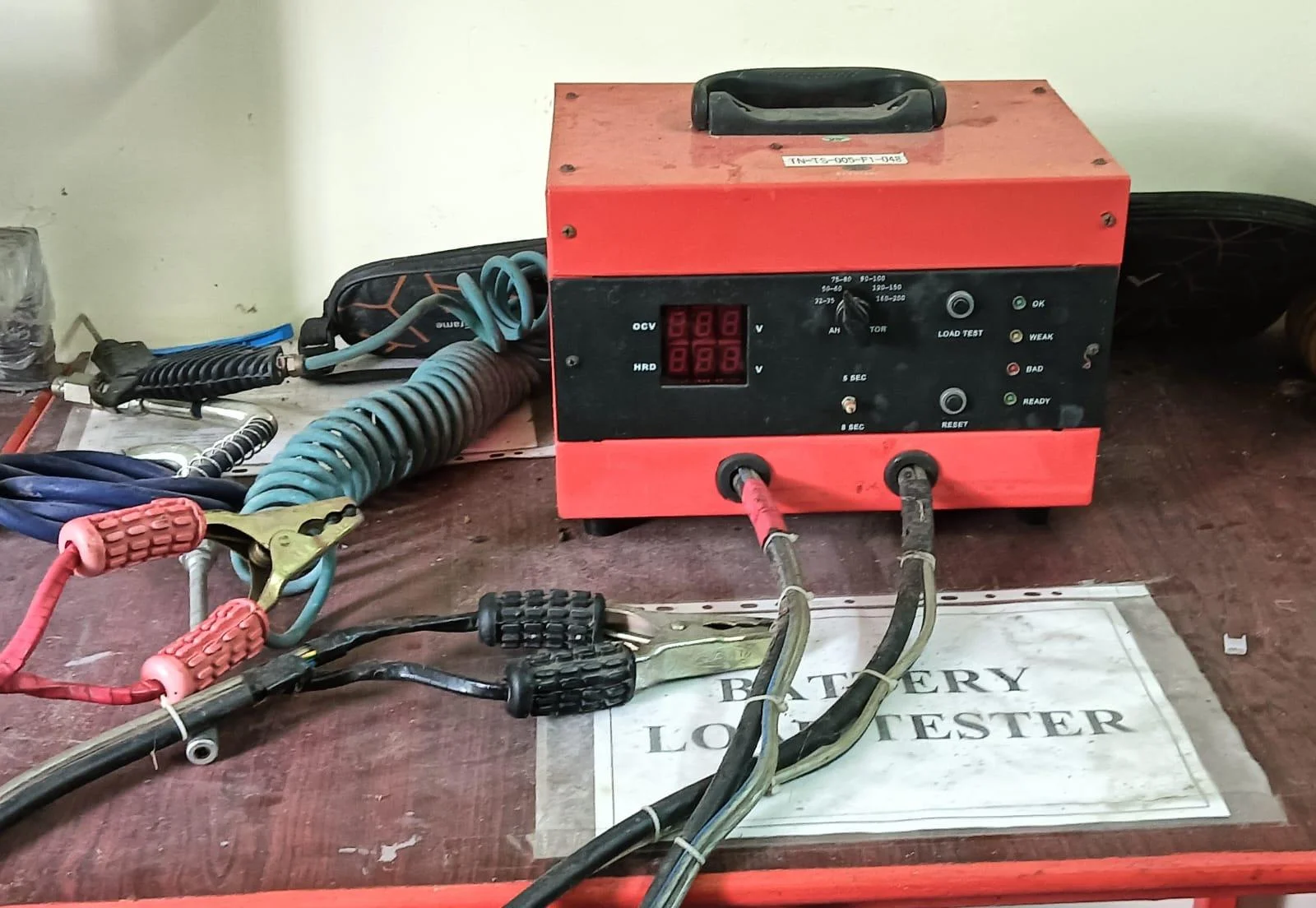
Battery load Tester
Load testing capacity: 200V
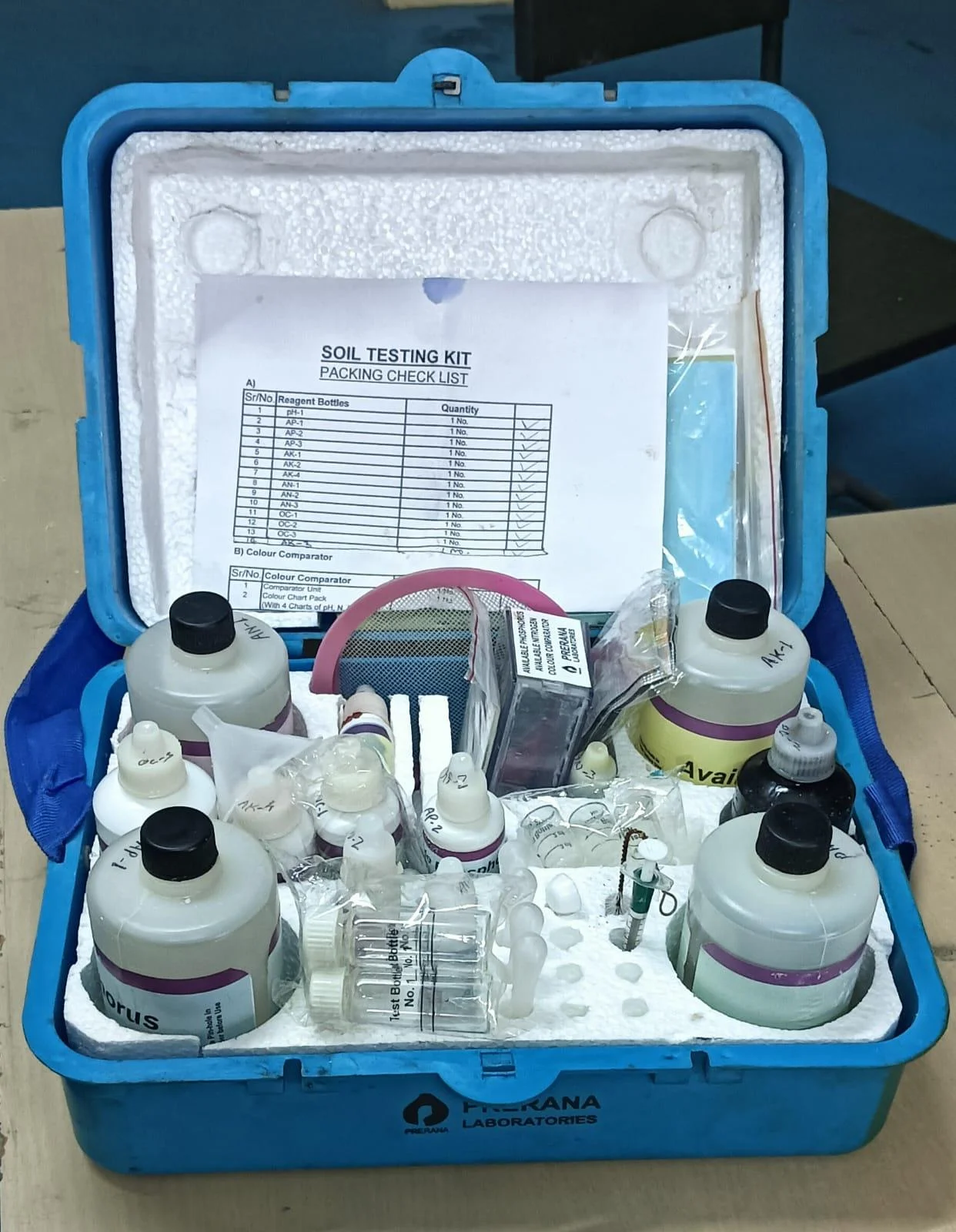
Soil Testing Kit
Water testing Kit
Irrigation control system
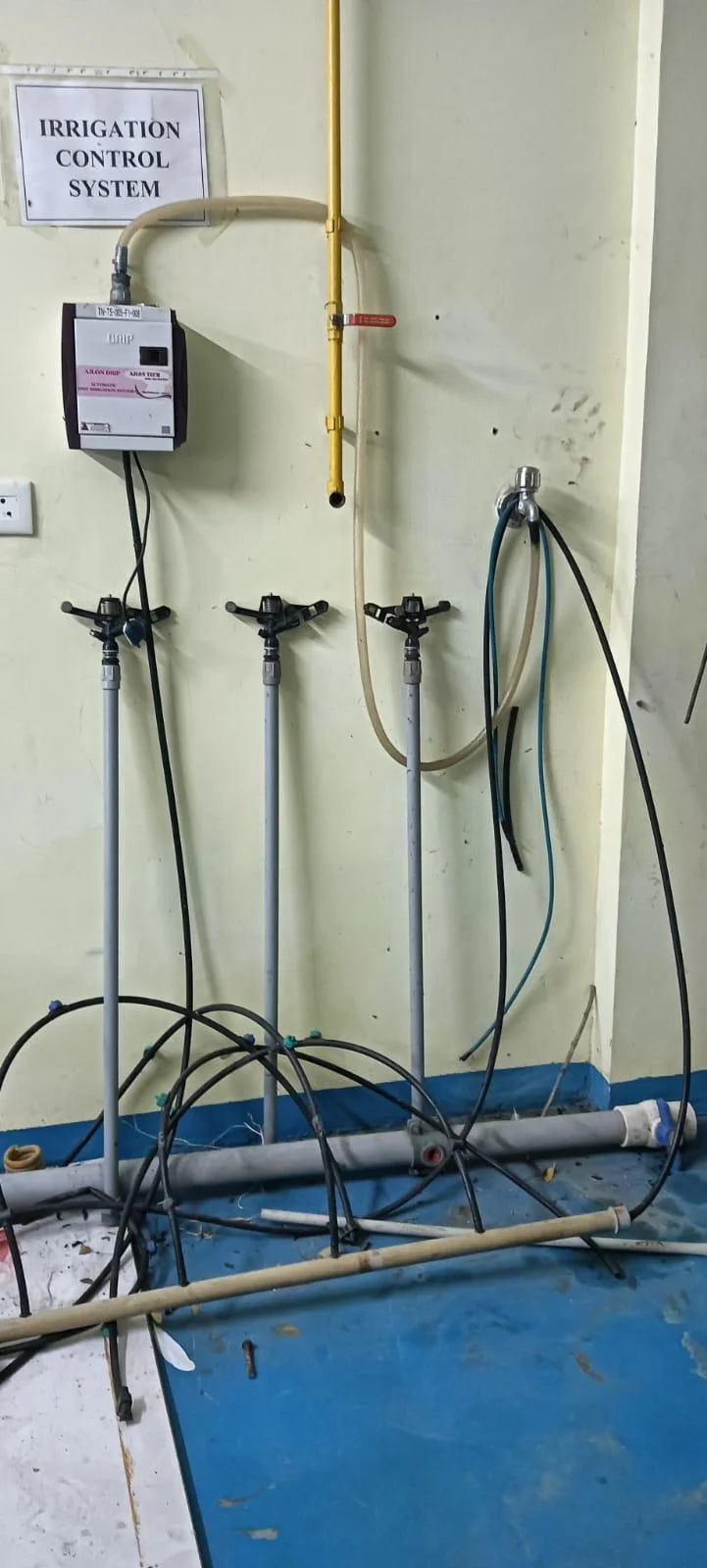
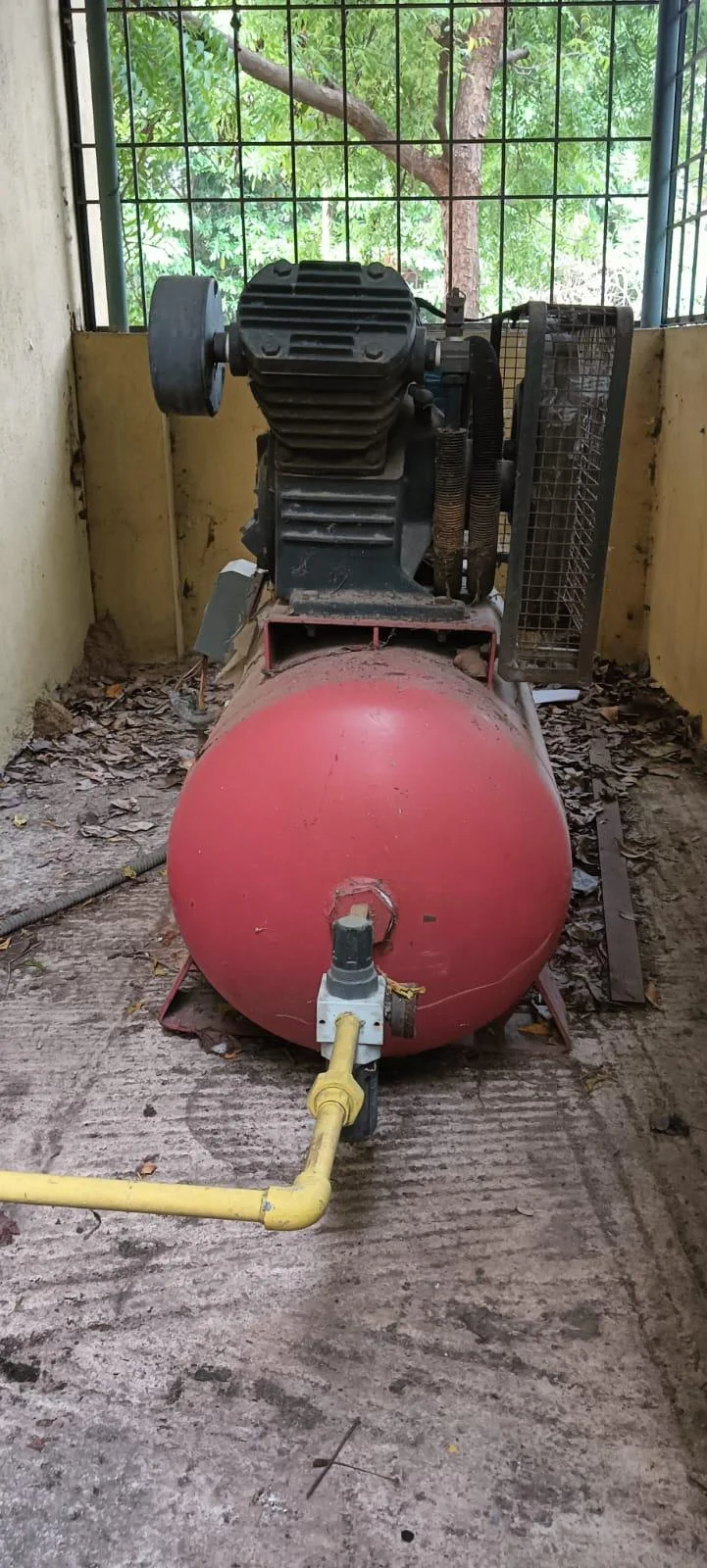
Air compressor
Mode: Both mode (manual or automatic)
Size: 508 x 1346
Capacity:250 LTR